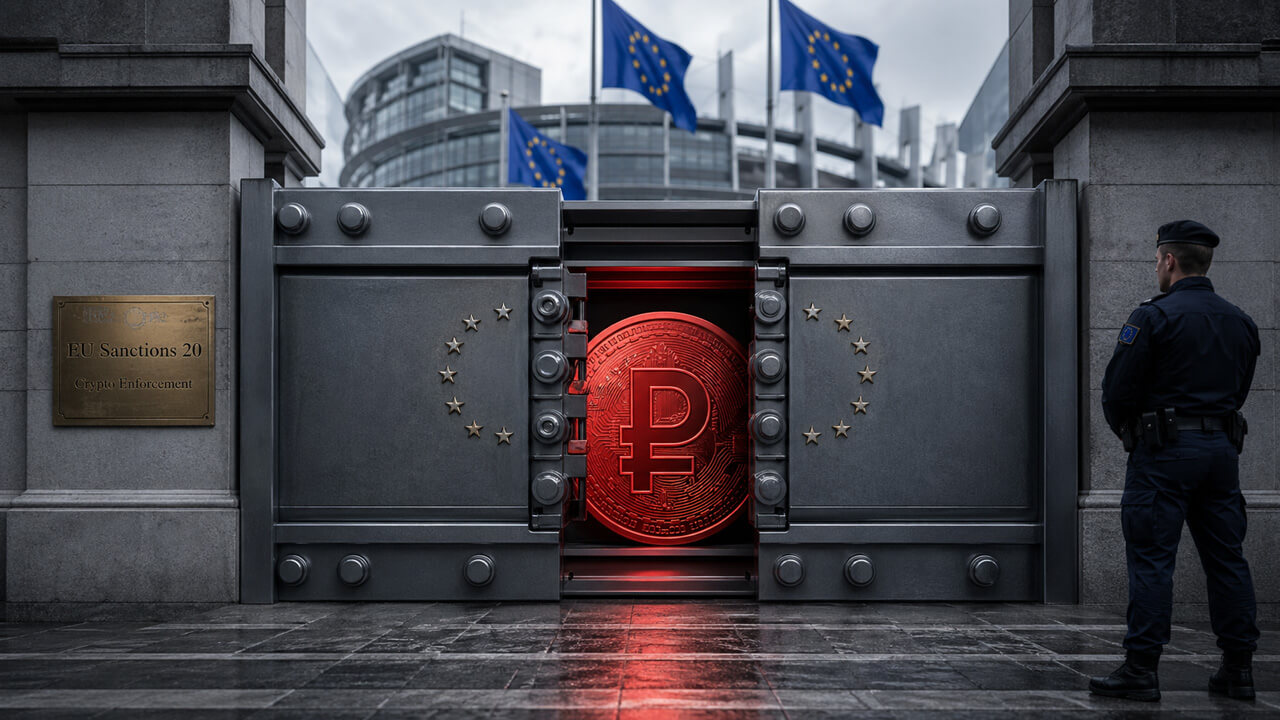
The EU rolled out its 20th sanctions package against Russia on April 23, this time targeting crypto infrastructure directly. The measures hit 120 new entities and ban ruble-backed tokens, crypto service providers, and decentralized trading platforms used by Russians.
This represents a shift in Western sanctions strategy. Previous packages focused on traditional finance and oil. Now Brussels is going after the infrastructure Russia uses to dodge existing restrictions through digital assets. Anyone caught using Russian crypto services faces sanctions exposure too.
The timing matters. Russia has leaned harder on crypto to circumvent sanctions and move money across borders as traditional banking channels tighten. Ruble stablecoins specifically became a workaround for settlement. The EU clearly noticed.
Enforcement remains the real question. Decentralized platforms operate without borders or gatekeepers. Banning them looks good on paper but stopping actual usage is harder. Some Russian users will find offshore exchanges. Others might move to peer-to-peer channels.
The broader signal is clearer. Western governments treat crypto as a sanctions evasion tool now, not just a speculative asset class. If you're building on-ramps between fiat and crypto in regulated jurisdictions, expect more pressure. The geopolitical fracture around crypto just deepened.