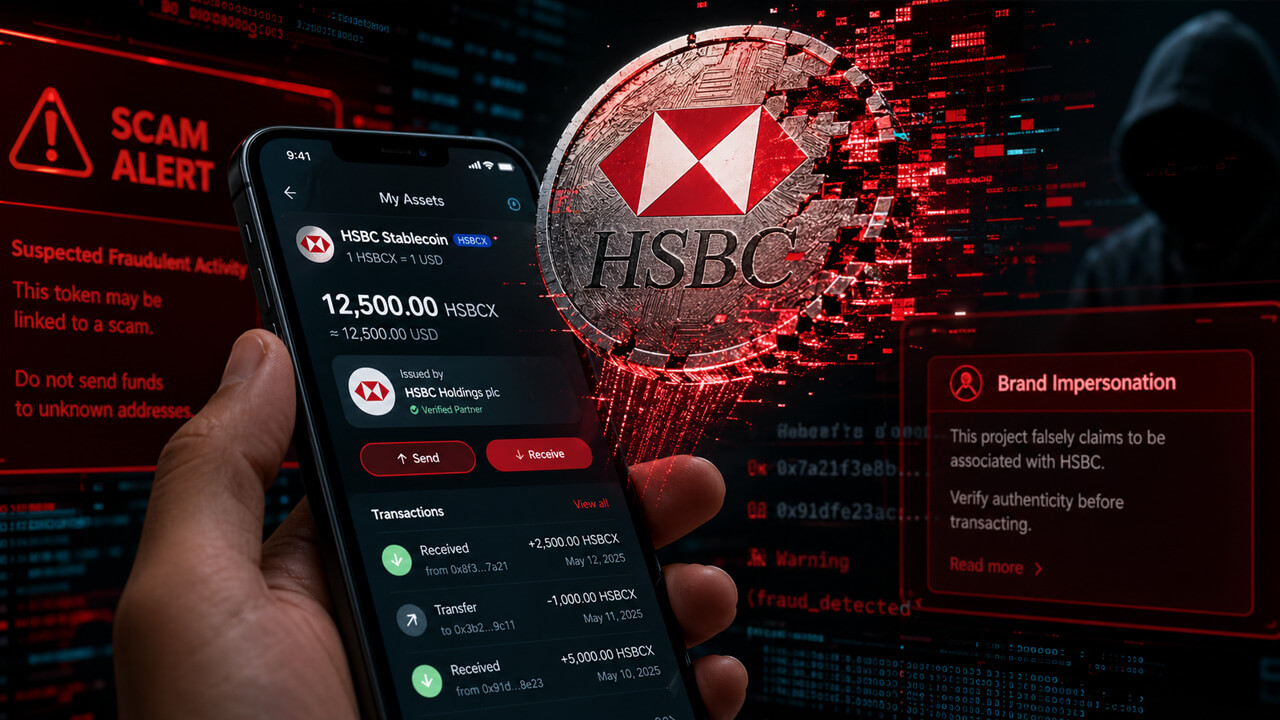
Fake HSBC stablecoins are circulating on the market, exploiting the bank's trusted institutional reputation. This scam wave reveals a critical weakness in crypto: retail users can't easily distinguish legitimate tokens from impersonators using real company names and professional branding.
Unlike typical rug pulls featuring anonymous founders and unrealistic promises, these counterfeits weaponize institutional credibility. They look legitimate because they copy the visual language and naming conventions of established banks. Millions of people recognize HSBC. That familiarity becomes the attack vector.
The danger runs deep. A holder seeing "HSBC stablecoin" might assume it's real due to the bank's global presence and reputation. They deposit funds. The token moves. Then liquidity vanishes. Law enforcement struggles to act across jurisdictions. The impersonators disappear.
This pattern exposes gaps in token verification. Blockchain explorers, DEX platforms, and wallets don't always flag impersonation attempts effectively. Users lack clear tools to verify whether a token is officially backed by the company it claims to represent.
The market needs better safeguards. Token standards could require official verification. Platforms could demand proof of institutional backing before listing. Until that happens, assume any "official" bank stablecoin claims a ton of scrutiny. Check official websites. Verify smart contract addresses directly. Don't trust the name alone.