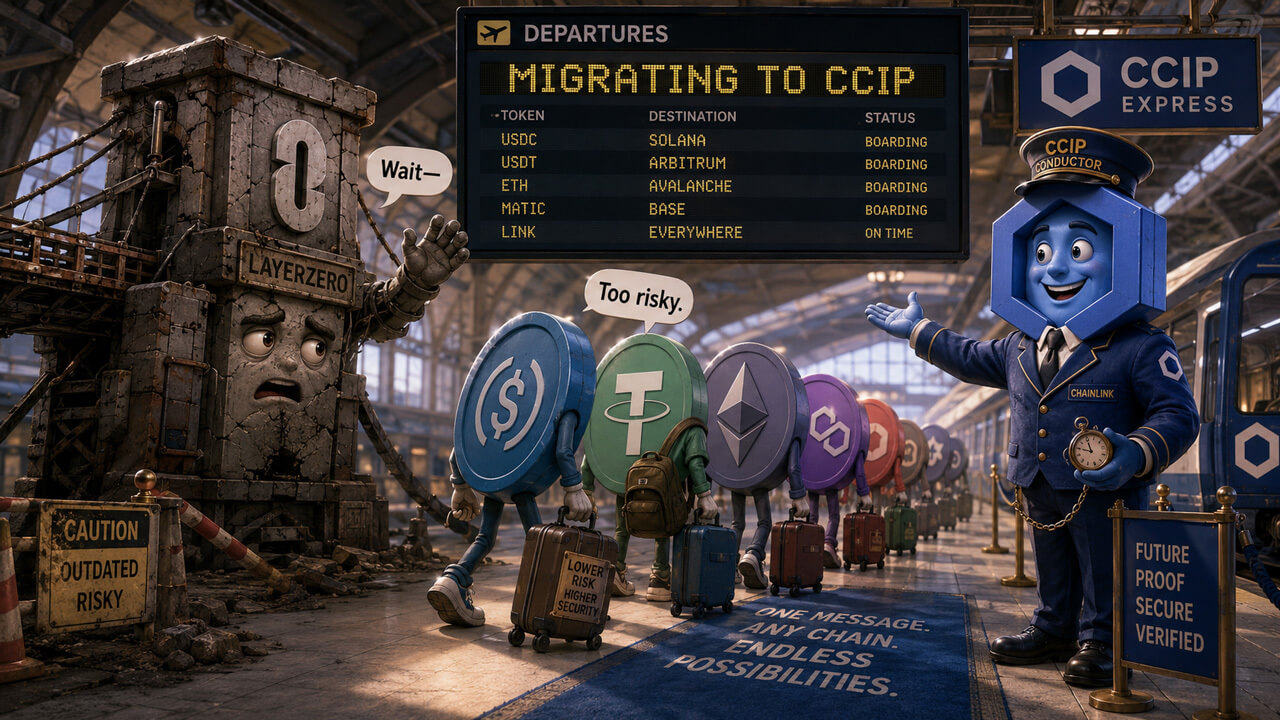
A $292 million exploit at KelpDAO triggered a major shift in cross-chain infrastructure choices across DeFi. Four protocols with over $3 billion in total value locked, including KelpDAO itself, Solv Protocol, Re, and Tydro, migrated away from LayerZero to Chainlink's Cross-Chain Interoperability Protocol (CCIP).
The KelpDAO breach exposed vulnerabilities in bridge security that had long plagued the sector. LayerZero, which powers cross-chain messaging for numerous DeFi projects, faced sudden scrutiny as projects reassessed their interoperability risks. The incident catalyzed a confidence shift toward established solutions with stronger security track records.
Chainlink's CCIP emerged as the primary beneficiary. The protocol's reliance on Chainlink's oracle network and multiple validator layers positioned it as a lower-risk alternative to messaging-based bridges. Chainlink confirmed the migration wave, marking a significant win for the established oracle giant in a competitive cross-chain infrastructure market.
LayerZero, which uses ultra-light nodes and a different security model, has built substantial adoption across Ethereum, Arbitrum, Optimism, and other chains. The protocol's architecture emphasizes efficiency and cost-effectiveness. However, the KelpDAO incident demonstrated that these design choices created exploitable surface areas. Projects began questioning whether LayerZero's lighter-weight approach sacrificed security for speed.
This migration represents a broader market recognition that cross-chain security cannot be treated as a secondary consideration. Bridge exploits have historically drained hundreds of millions. The sector learned from previous incidents at Ronin, Horizon, and Poly Network that infrastructure providers must maintain redundancy and transparent security practices.
The shift also reflects institutional pressure within DeFi. Projects with significant TVL face reputational damage from bridge failures. Chainlink's established reputation and insurance mechanisms made CCIP an attractive option for risk-conscious protocols. LayerZero's community, while strong, lacks the corporate backing and historical security reputation of Chainlink.
This consolidation could reshape cross