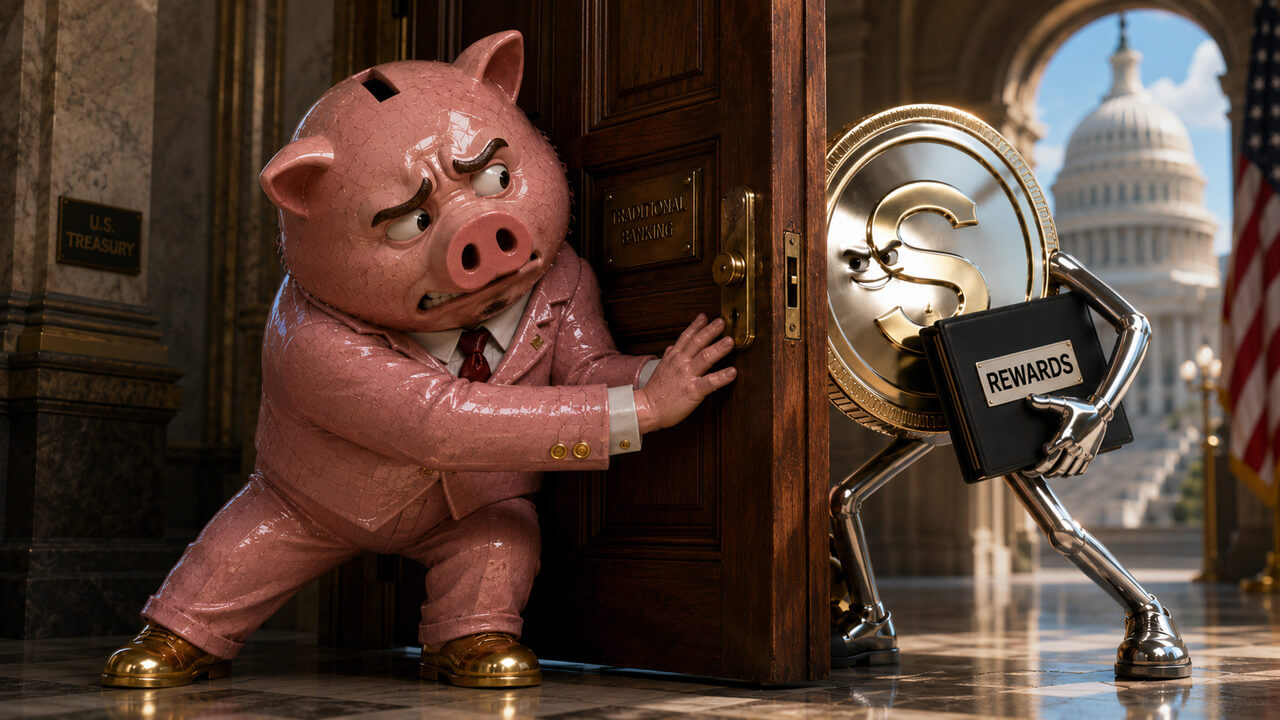
The White House escalated tensions with major U.S. banking trade groups over stablecoin regulation, accusing them of refusing to attend meetings aimed at resolving disputes around rewards mechanisms in the CLARITY Act. A senior White House official made the accusation public on May 11, intensifying pressure as the Senate Banking Committee prepares to take up the legislation.
The stablecoin rewards issue has emerged as a flashpoint in final negotiations over the CLARITY Act, which establishes a comprehensive regulatory framework for stablecoin issuers. Banking lobbyists have resisted language permitting stablecoins to offer yield or rewards to holders, viewing the practice as potentially competing with traditional deposit products and threatening banking system stability.
The White House pushed back against this position, attempting to broker compromise through direct engagement. The official's public callout of banks' refusal to participate signals frustration with the impasse and attempts to apply public pressure before committee action.
The CLARITY Act represents a major legislative push toward stablecoin clarity after years of regulatory fragmentation. The bill would establish the Office of the Comptroller of the Currency as the primary regulator and require stablecoin issuers to maintain 100 percent reserve backing. Notably, the legislation sidesteps crypto's most contentious issues, focusing narrowly on stablecoins rather than broader crypto regulation.
Banking groups maintain that permitting stablecoin rewards could undermine traditional finance by offering higher-yield alternatives to bank deposits. They argue deposits fund critical lending functions and that crypto alternatives pose systemic risk. Stablecoin issuers counter that rewards are standard practice in decentralized finance and essential for competitive positioning.
The timing matters. With the Senate Banking Committee poised to advance the bill, this public dispute signals the compromise phase remains contested. The White House's willingness to call out industry obstruction publicly suggests the administration views the Act as a priority and is willing to apply leverage to unlock agreement before committee markup.