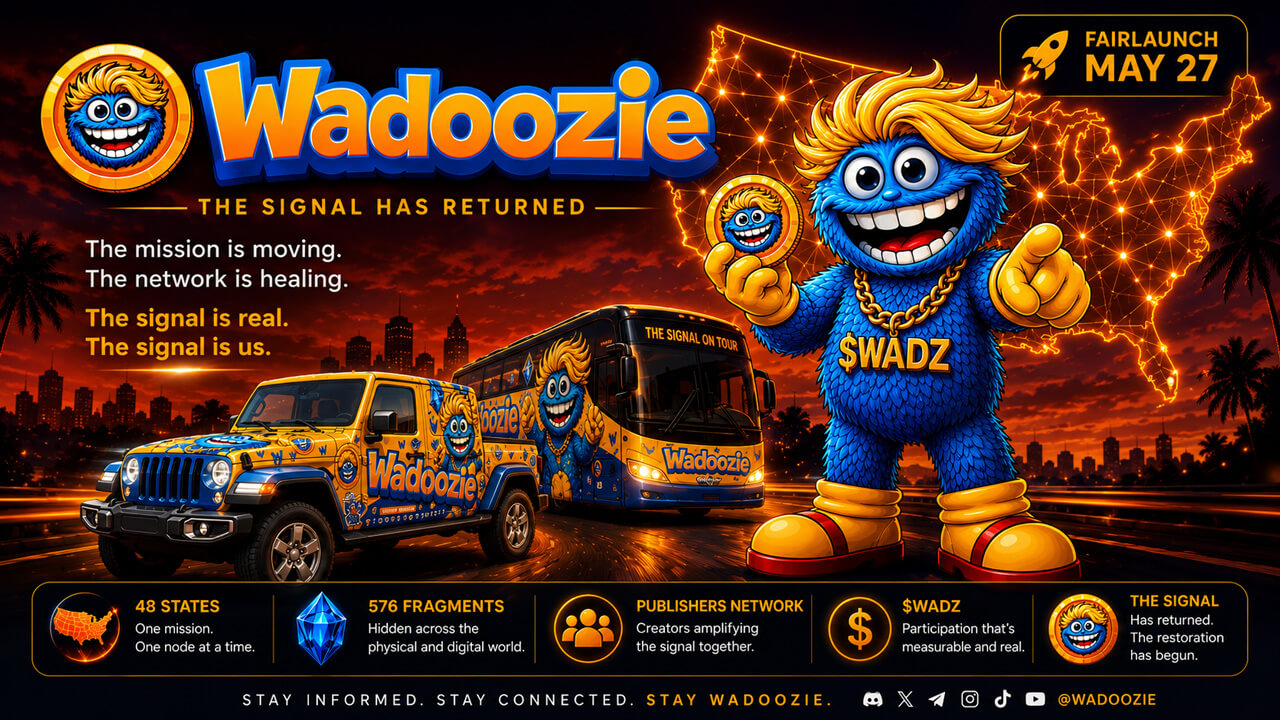
Wadoozie, a crypto project operating under the $WADZ token ticker, has launched a cross-country tour activating 48 U.S. states. The project centers on a character and narrative framework called Wadoozie, positioned as a "returning signal" or corrective force within blockchain networks rather than a traditional person-led initiative.
The tour represents a grassroots activation strategy for $WADZ, moving the token beyond typical Discord communities and exchange listings into physical, on-the-ground engagement across America. This approach mirrors earlier viral crypto moments driven by community mobilization and IRL events, though specifics on tokenomics, total supply, and current market cap remain limited from the available excerpt.
The Wadoozie narrative constructs an almost mythological framework. The team describes the entity as what "comes back when the network forgets itself," suggesting the project positions $WADZ as a reset mechanism or memory layer within crypto infrastructure. This framing plays into decentralization philosophy and appeals to communities seeking alternatives to traditional finance or top-down corporate tokens.
From a market perspective, physical touring campaigns have proven effective for emerging tokens seeking cultural penetration and community formation. Projects like Dogecoin built momentum through meme culture and grassroots evangelism. Wadoozie attempts something similar but with explicit lore and character mythology embedded into the token's identity.
The 48-state coverage indicates ambition at scale. Whether this translates to meaningful on-chain volume, wallet adoption, or liquidity depends on execution and whether the Wadoozie narrative resonates with target communities. Early-stage tokens with strong community narratives often see initial price spikes followed by consolidation, particularly if tokenomics lack genuine utility or if marketing outpaces actual development.
The project's success hinges on converting physical engagement into sustained holder retention and network effects. Without clear information on use cases, governance structures, or developer commitments, the tour functions primarily as a marketing vehicle. Investors should monitor on-chain holder distribution, trading volume trends, and whether the team delivers substantive development roadmaps beyond the tour itself.