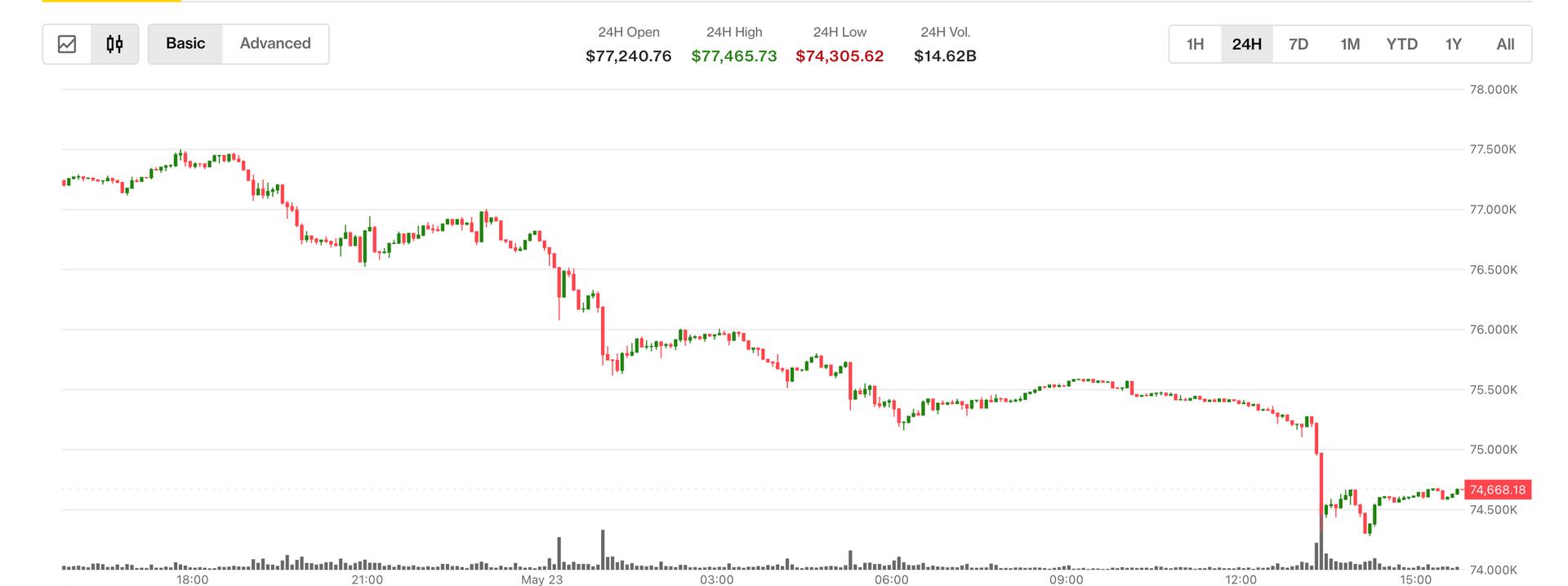
Bitcoin dropped to $74,300 as spot bitcoin ETFs experienced significant outflows totaling $2.26 billion over a two-week period. The exodus from U.S.-listed spot ETF products marks a notable reversal in institutional demand for the leading cryptocurrency.
The timing of these outflows coincides with broader market weakness. Bitcoin had traded above $100,000 in December but has retreated sharply into the new year. The selloff from spot ETFs suggests that institutional investors, who have poured money into these products since their January 2024 launch, are now taking profits or repositioning their portfolios.
Spot bitcoin ETFs launched in the U.S. roughly a year ago and quickly accumulated over $60 billion in assets under management. They represented a watershed moment for institutional adoption, allowing traditional investors to gain bitcoin exposure without managing private keys or using cryptocurrency exchanges. However, the recent $2.26 billion in outflows signal a potential shift in sentiment.
The price action reflects competing pressures on the bitcoin market. While some investors trim positions amid profit-taking, others may be rotating capital into alternative assets or responding to macroeconomic headwinds. The Fed's rate trajectory and broader equity market performance often influence cryptocurrency flows, and any signs of economic uncertainty can trigger defensive repositioning.
Bitcoin's decline to $74,300 represents a sharp pullback from its December peaks, testing support levels that will determine whether the rally sustains or accelerates downward. The spot ETF outflows carry outsized importance because these products have become a barometer of institutional conviction. Large redemptions suggest that even traditionally patient capital is willing to exit at current price levels.
The next critical period will show whether these outflows represent a temporary rotation or the start of a deeper institutional retreat. Spot ETF inflows and outflows have become key technical indicators that market participants watch closely for signs of institutional appetite shifts.