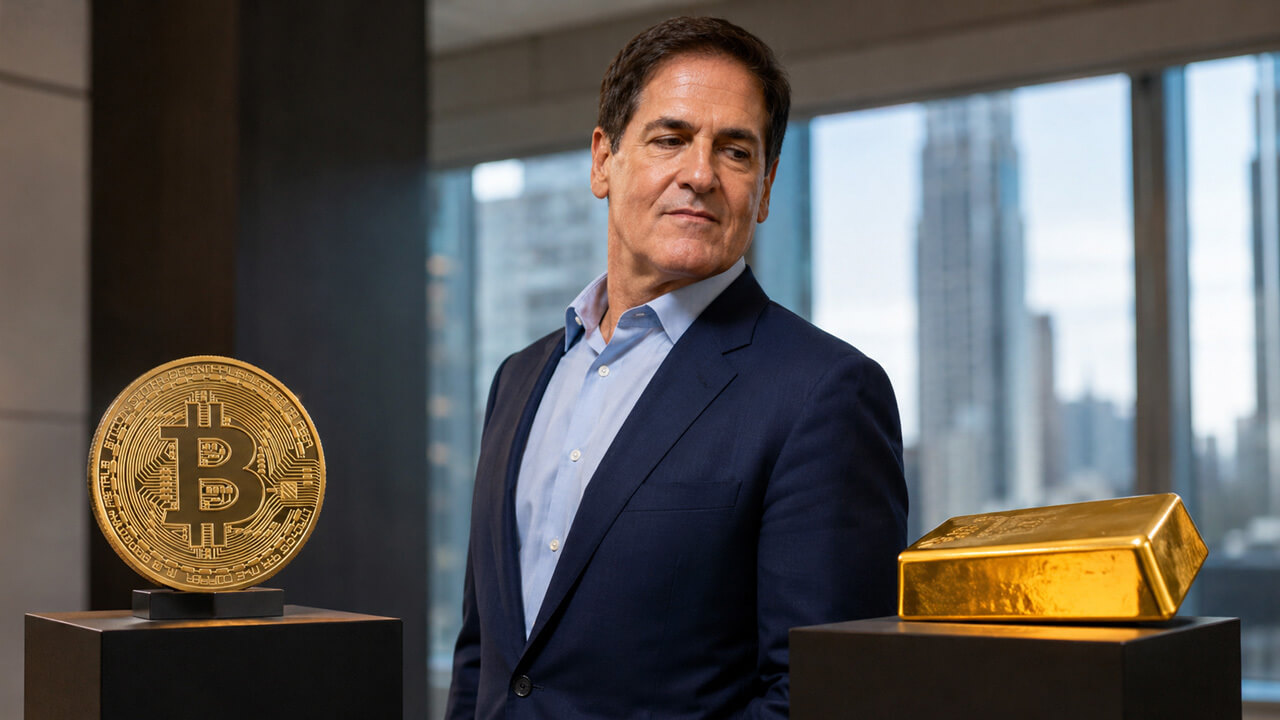
Mark Cuban dumped most of his Bitcoin holdings, citing failure as a hedge against fiat currency weakness and geopolitical risk. The billionaire investor stated it "was not the hedge I expected it to be," pointing to Bitcoin's price action as evidence. BTC traded around $77,663 in mid-May 2026, down roughly 38% from its $126,000 all-time high.
Cuban's sale exposes a longstanding tension in Bitcoin narrative. Proponents market the asset as "digital gold" and a store of value during macro instability. In practice, Bitcoin has often moved in tandem with risk-on equities during uncertainty rather than appreciating as a safe harbor. When fiat confidence weakens and geopolitical tensions spike, investors typically flee to traditional hedges like Treasuries and precious metals. Bitcoin instead frequently sells off alongside equities.
The 38% drawdown from peak validates Cuban's frustration. During periods when a true hedge would appreciate, Bitcoin retreated. This pattern repeats across multiple macro cycles. The asset demonstrates volatility but not reliable inverse correlation to equity markets or currency weakness.
Cuban's move reflects a pragmatic reassessment. Bitcoin survives on its own merits as a monetary system, not on macro hedge properties. Its value proposition rests on censorship resistance, fixed supply, and network effects. Those attributes function independent of whether it hedges portfolio risk.
The sale underscores an uncomfortable reality for macro-focused Bitcoin bulls. The asset hasn't proven its hedge thesis in real stress scenarios. Yet it persists as a monetary bet because the underlying network remains functional and decentralized. Cuban clearly separated the two: Bitcoin failed as insurance but continues as a bet on monetary alternatives.
This distinction matters for positioning. Institutions and retail investors treating Bitcoin as portfolio insurance will face disappointment. Those viewing it as a long-term bet on decentralized money accept volatility without expecting correlation benefits. Cuban's exit from the hedge narrative suggests a recalibration among sophisticated investors toward the latter.