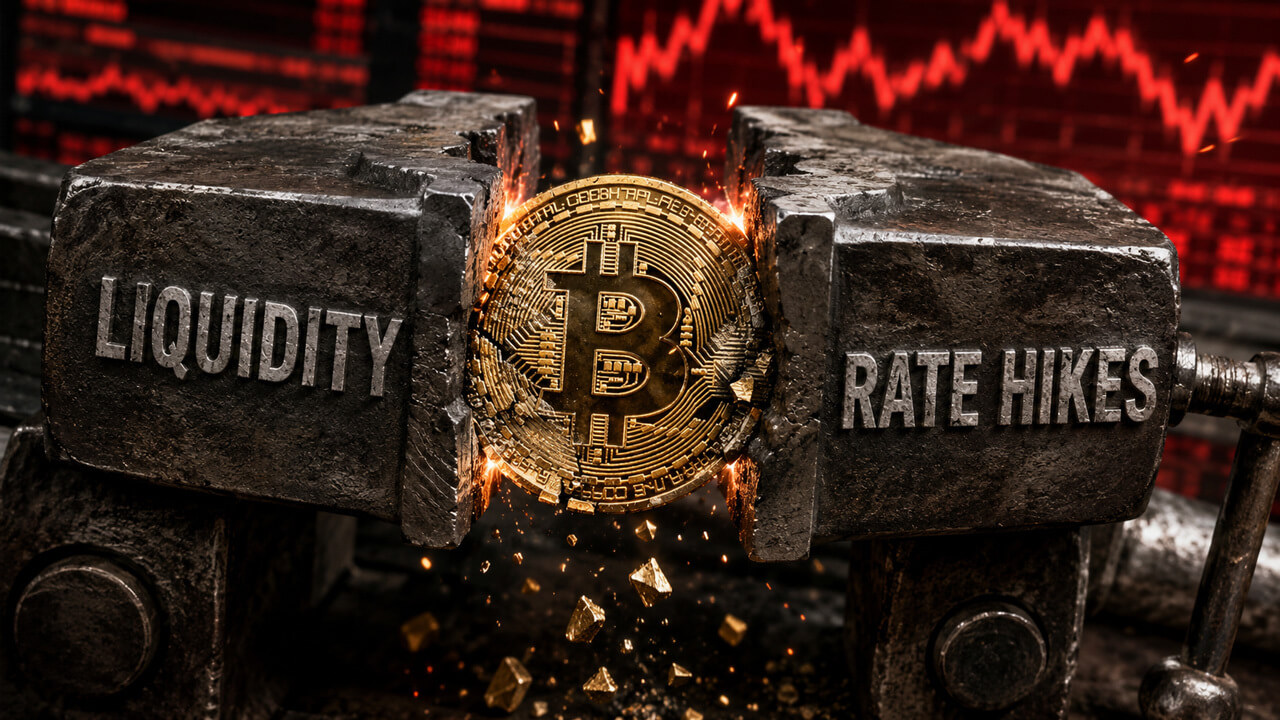
Bitcoin traders face a sharp reversal in macro positioning after the Federal Reserve's April meeting minutes signaled the opposite of what markets had priced in all year. The minutes, released Wednesday, showed Fed policymakers leaning toward additional tightening if inflation persists above the 2% target. That stance contradicts the widespread expectation for rate cuts that has underpinned Bitcoin's rally since late 2023.
The shift represents a critical turning point. Markets had built positioning around a "rate-cut trade" that assumed the Fed would begin easing monetary policy by mid-2024. Bitcoin rallied on that thesis, climbing toward $70,000 on the premise that looser financial conditions would benefit risk assets. The Fed minutes destroy that narrative.
Instead of cuts, policymakers signaled readiness to hike again if inflation proves sticky. This reversal forces Bitcoin bulls to confront two uncomfortable realities. First, higher-for-longer rate expectations tighten liquidity conditions, pressuring speculative assets. Second, the hawkish surprise suggests the Fed retains inflation concerns despite recent disinflation progress.
Current inflation sits above target, giving policymakers political cover to maintain restrictive policy longer than markets anticipated. Bitcoin's sensitivity to rate expectations means the asset faces headwinds if the Fed holds steady or raises rates again. The contrast is stark. Earlier this year, Bitcoin benefited from Fed pivot hopes. Now those hopes have evaporated.
On-chain data shows mixed signals. Whale accumulation continues in certain cohorts, but retail flows have weakened. The spot Bitcoin ETF inflows that drove early-2024 gains have slowed considerably. Price action reflects the macro uncertainty. Bitcoin remains above $60,000 but struggles to reclaim $70,000.
The April minutes effectively reset market expectations. Traders who positioned for cuts must now account for hike risk. This creates volatility but also opportunity for those reassessing Bitcoin's macro backdrop. The rate-cut trade is dead. What replaces it depends on inflation data and Fed communications in coming weeks.