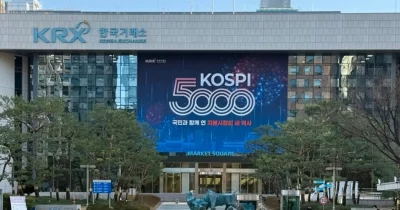
South Korea's financial regulator green-lit the launch of single-stock leveraged ETFs tracking Samsung and SK Hynix this week, marking the country's entry into concentrated derivative products tied to blue-chip equities. These vehicles allow retail investors to amplify exposure to individual stocks through leverage mechanics, bypassing traditional margin trading channels.
The move raises volatility concerns. Single-stock leveraged ETFs compound daily returns through constant rebalancing, creating path-dependent performance that diverges from underlying asset moves over longer periods. Amplified exposure to Samsung and SK Hynix, two pillars of the Korean economy and tech sector, could exacerbate intraday swings and cascade through connected markets. Institutional traders and algorithm-driven funds typically exploit these rebalancing patterns, creating friction for retail holders.
South Korea's regulator faces pressure from both sides. Retail investors demand access to leveraged instruments as competitive alternatives to offshore derivative platforms. Financial stability officials worry about systemic risk if these products attract undercapitalized speculators. The Samsung and SK Hynix focus reflects Korean market structure, where these megacaps dominate indices and trading volumes.
The timing matters. Samsung trades near 70,000 KRW per share, while SK Hynix hovers around 150,000 KRW. Both face cyclical semiconductor headwinds from AI overcapacity and inventory corrections. Leveraged products tied to these stocks during uncertain earnings seasons could trigger forced liquidations and flash crashes, especially if market depth thins during after-hours or regional panic selling.
Regulators are already preparing guardrails. Position limits, daily loss thresholds, and mandatory circuit breakers may follow as the products gain adoption. South Korea's Financial Services Commission typically monitors leverage ratios and investor composition closely after launch. If retail participation balloons beyond acceptable thresholds, the regulator may impose stricter caps or suspend new product approvals.
This launch reflects the broader Asian push toward financial product democratization, mirroring similar moves in Hong Kong and Singapore. However, single-stock leverage remains a high-