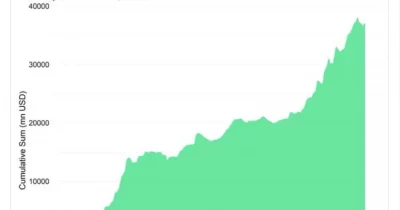
JPMorgan projects institutional capital inflows into Bitcoin and crypto assets will surpass $130 billion this year, signaling accelerating mainstream adoption driven by regulatory clarity and institutional confidence.
The projection reflects a shift in Wall Street's stance toward digital assets. JPMorgan, historically cautious on crypto, now sees institutional demand as a primary catalyst for market growth. Bitcoin ETF approvals in the US earlier this year eliminated a major barrier to entry for traditional investors and fund managers bound by regulatory constraints. Spot Bitcoin ETFs pulled in billions within weeks of launch, validating JPMorgan's thesis that regulatory clarity removes friction.
Beyond Bitcoin, the $130 billion figure encompasses broader crypto markets. Ethereum, layer-2 solutions, and decentralized finance protocols stand to benefit from this capital flow. Institutional money typically chases infrastructure projects with clear use cases and risk management frameworks. Ethereum's role as the leading smart contract platform and the maturation of layer-2 networks like Arbitrum and Optimism present viable targets for large allocators.
Regulatory developments in the US, EU, and Asia have created a more predictable operating environment. The SEC's shift toward spot crypto ETF approvals signals tacit acceptance of Bitcoin as an institutional asset class. Meanwhile, stablecoin frameworks and clearer custody standards reduce counterparty risk concerns that previously deterred pension funds and asset managers.
JPMorgan's forecast aligns with broader market trends. On-chain data shows sustained institutional wallet accumulation of Bitcoin despite recent volatility. MicroStrategy and other corporate treasuries continue adding to reserves. Traditional custodians like Fidelity and Coinbase Prime now compete for institutional crypto assets, lowering concentration risk.
The $130 billion projection remains conservative compared to total institutional AUM, which exceeds $100 trillion globally. Crypto's share of institutional portfolios remains single-digit percentage allocations at most. This suggests room for multiples of the projected inflows if adoption accelerates. Regulatory tailwinds and proved custody infrastructure have genuinely shifted institutional risk calculations. Bitcoin's fixed supply story continues to resonate amid