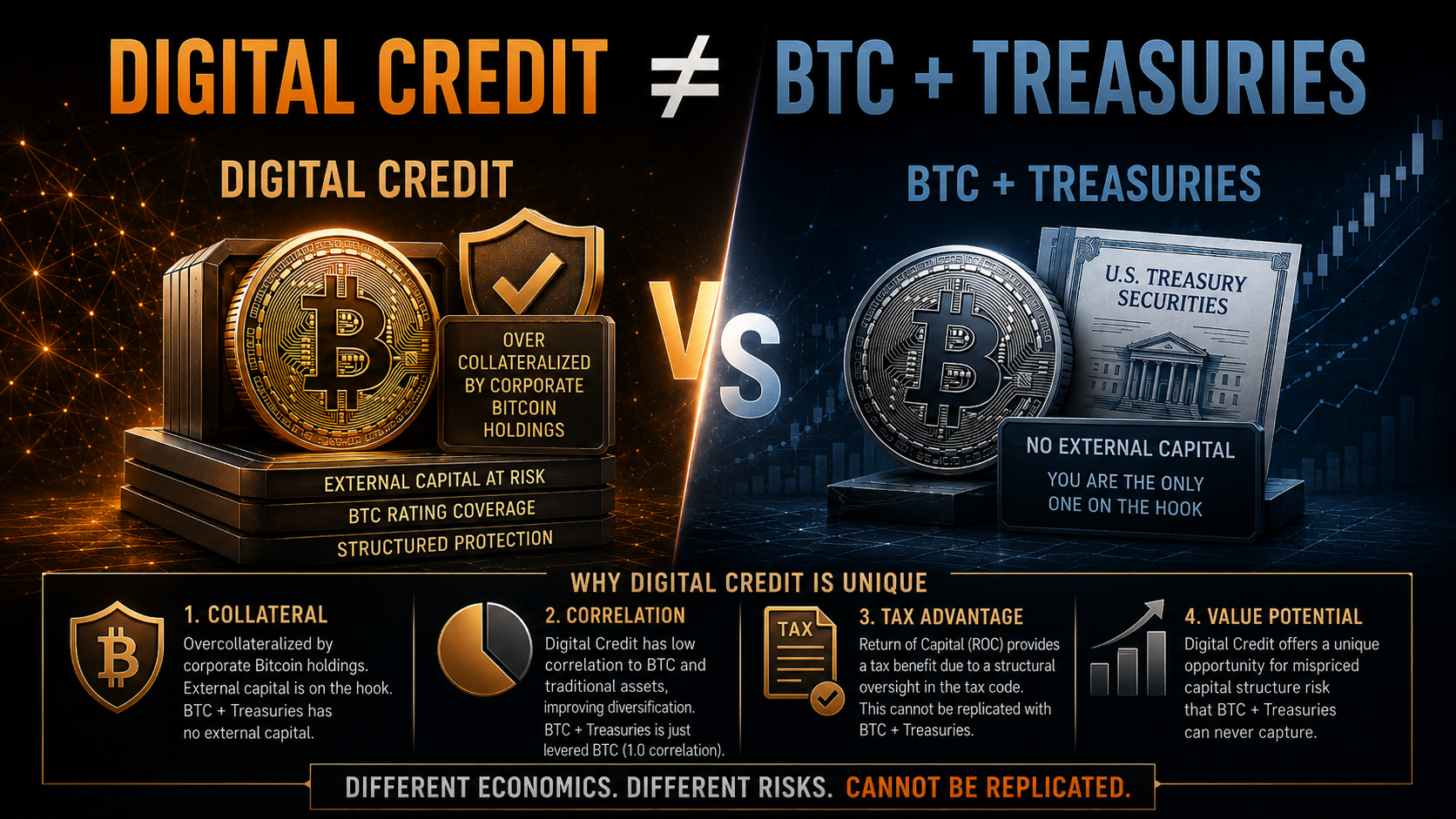
A Bitcoin Magazine analysis directly challenges Onramp's thesis that digital credit systems can be replicated through a simpler mechanism combining Bitcoin holdings and US Treasury bonds.
The article contests the argument that Bitcoin and Treasuries create an equivalent substitute for digital credit infrastructure. Digital credit systems operate with embedded mechanics for lending, borrowing, and collateralization that extend beyond basic asset holding. These protocols generate liquidity through algorithmic interest rates, flash loans, and composable smart contracts. Bitcoin and Treasury positions lack this internal credit mechanism.
Onramp proposed the "simpler trade" as a way to sidestep the risks inherent in digital credit protocols. Those risks include smart contract vulnerabilities, liquidation cascades, and counterparty exposure through lending pools. By contrast, holding Bitcoin directly and Treasuries on traditional rails eliminates protocol-layer attack vectors.
The rebuttal argues this misses the purpose digital credit serves. On-chain lending enables capital efficiency through leverage, yield generation across staked assets, and collateral composability. Bitcoin held in cold storage and government bonds in custodial accounts don't replicate the yield or access mechanisms these systems provide. The comparison treats apples and oranges.
Digital credit's friction lies partly in complexity, but its value proposition centers on removing intermediaries from lending markets. A Bitcoin plus Treasury approach reintroduces traditional finance gatekeeping. For institutional players and retail users seeking non-custodial leverage or yield, the Bitcoin-Treasury framework offers no equivalent.
The debate reflects broader tension in crypto finance. Simplicity and risk reduction matter for institutional adoption. So does maintaining decentralization and removing middlemen. Onramp prioritizes the former. Bitcoin Magazine's perspective demands the latter remain intact. Neither addresses whether hybrid models might bridge both concerns.