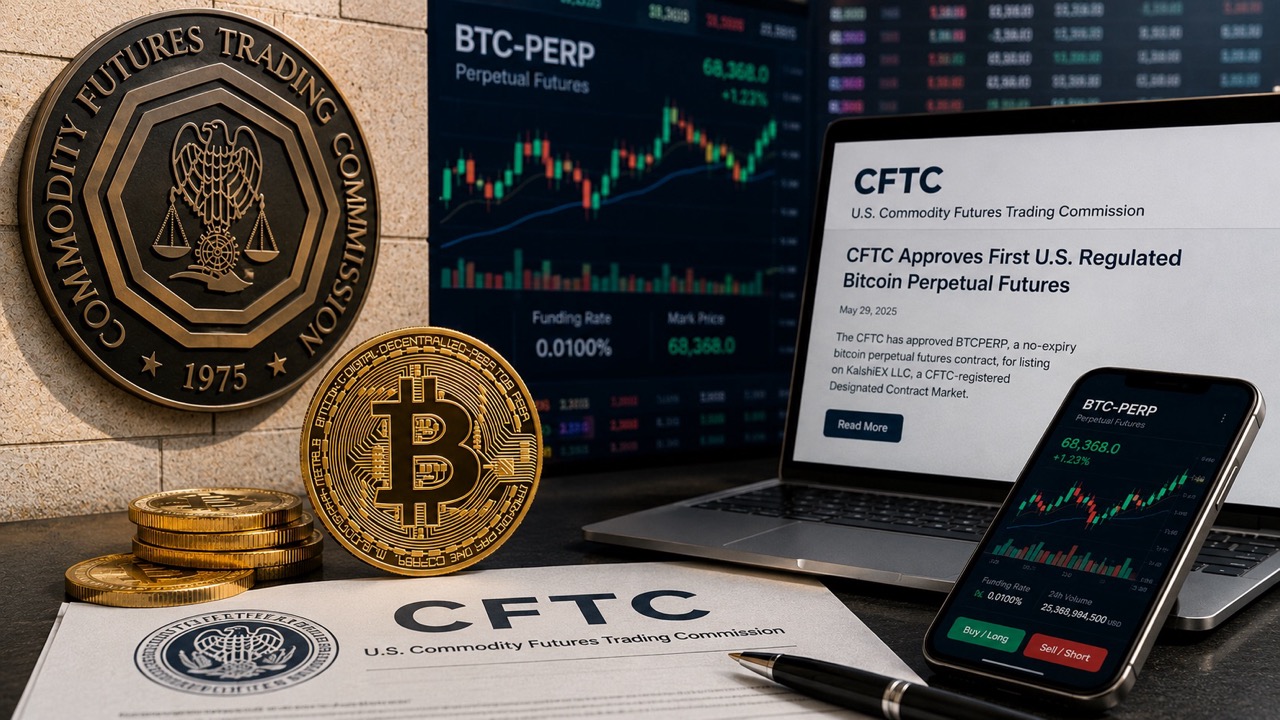
The CFTC has cleared the way for US-regulated Bitcoin perpetual futures, marking a watershed moment for domestic derivatives trading. KalshiEX LLC received approval to list BTCPERP as a futures contract on its CFTC-registered designated contract market. Separately, Coinbase Financial Markets obtained staff-level relief to access certain Deribit perpetual products.
This dual-track approval shifts Bitcoin perps from offshore platforms into the American regulatory framework. KalshiEX's BTCPERP contract operates under full CFTC oversight, establishing a legitimate on-shore alternative to the unregulated derivatives liquidity pools that have dominated crypto markets. The Coinbase relief grants institutional access to Deribit's deep order books while maintaining compliance posture.
The catch, however, centers on position limits and market concentration rules. KalshiEX contracts must navigate CFTC position-limit requirements that could constrain retail and institutional trading sizes compared to offshore venues. This creates a structural disadvantage against unregulated platforms offering unlimited leverage and position sizes. Deribit's dominance in Bitcoin perpetuals, roughly 30 percent of all open interest, means Coinbase's relief only provides gateway access rather than true market competition.
Regulatory arbitrage remains the core tension. Sophisticated traders will continue routing through offshore platforms offering superior liquidity and leverage. The US-approved products face an uphill battle competing on tighter margin requirements and position caps. Yet institutional players and compliance-conscious funds may now route Bitcoin derivatives through KalshiEX and Coinbase channels, fragmenting liquidity between regulated and unregulated venues.
The CFTC's move addresses years of pressure from traditional finance seeking legitimacy in crypto derivatives. However, enforcement against offshore competitors remains inconsistent. Without aggressive action shutting down unlicensed platforms, US-regulated products operate in a hybrid market where the regulatory "green light" becomes just one option among many.