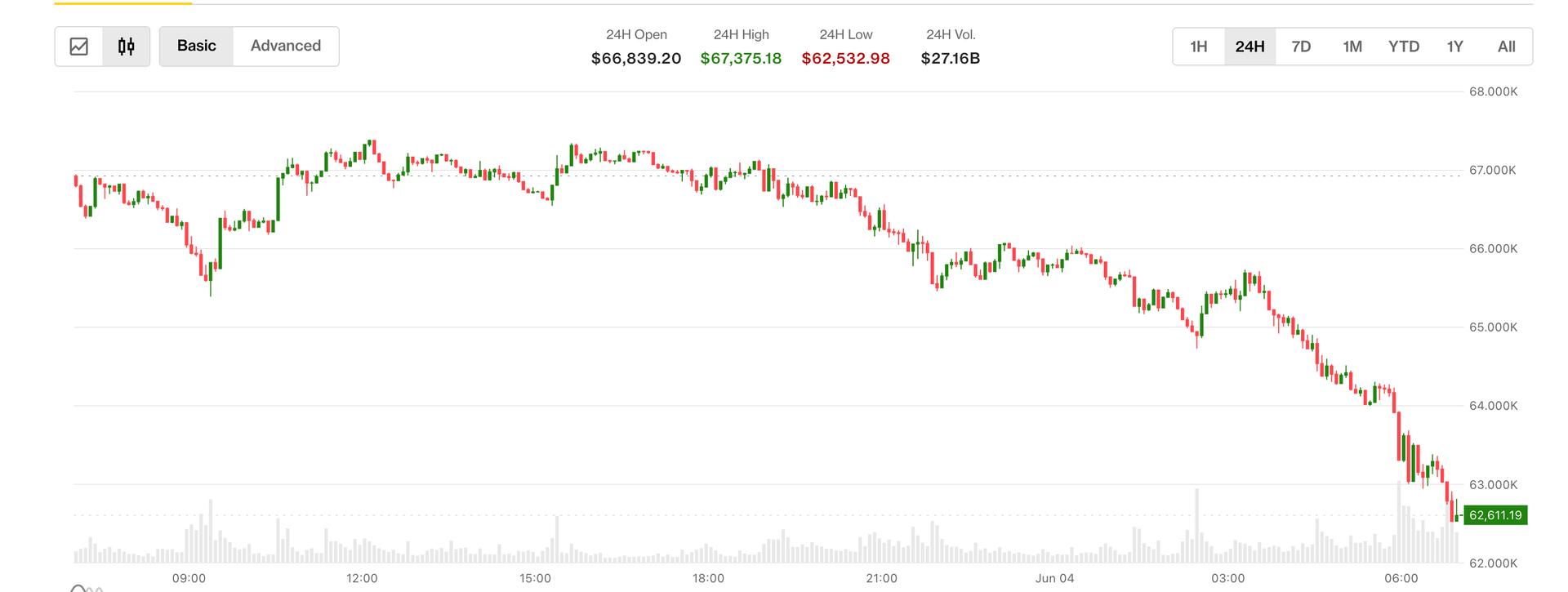
Bitcoin collapsed below $63,000 for the first time since February, marking a sharp reversal from its recent highs near $73,000. The decline accelerated across crypto markets, with traders rotating heavily into defensive positioning.
The move spiked the Crypto Fear and Greed Index upward as investors rushed to buy put options for downside protection. Options volumes surged as traders hedged exposure, reflecting genuine concern about the pace of losses. The breakdown below $63,000 represents a loss of roughly $10,000 per coin from January peaks, invalidating technical support levels that had held through recent volatility.
Macro headwinds appear to be driving the retreat. Broader equity weakness, potential interest rate hikes, and shifts in institutional demand have weighed on risk assets. Bitcoin's correlation with tech stocks remains elevated, tying its fate to Nasdaq performance. The selloff gained momentum after failing to hold above $68,000 resistance earlier in the week.
On-chain data shows mixed signals. Whale accumulation has slowed considerably, and exchange inflows increased slightly, suggesting some distribution by long-term holders. Short-term holder losses have mounted, with many retail positions now underwater from December entry points.
The technical picture deteriorated sharply. The 50-day moving average, which had supported price action, gave way convincingly. Traders now watch $60,000 as the next critical floor. A break below that level would test psychological support at $55,000, marking a near-30 percent drawdown from cycle highs.
Options positioning shows asymmetric protection bets accumulating at $60,000 and $55,000 strikes, with call demand drying up above $70,000. This skew indicates market participants expect further downside before any sustained recovery takes shape. Liquidation cascades on leverage positions may amplify volatility if support fails definitively.