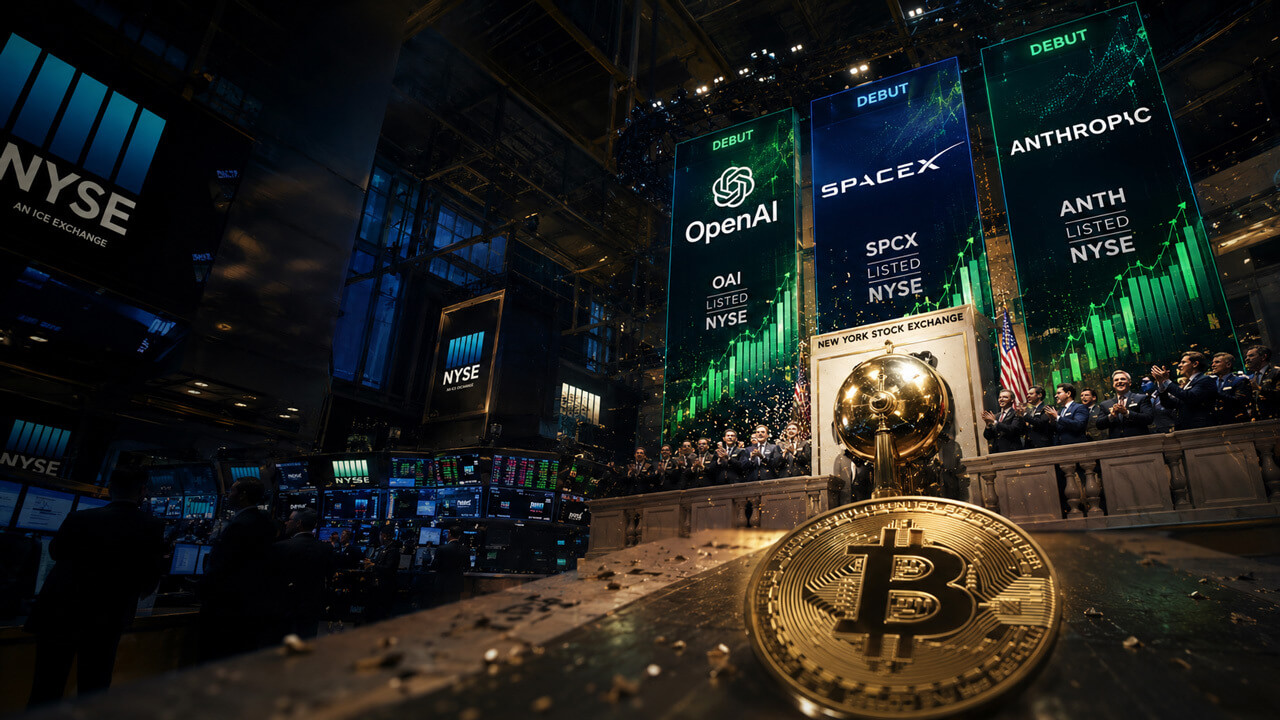
OpenAI filed a confidential S-1 with the SEC, targeting a public market debut as early as September at a valuation between $852 billion and $1 trillion. The filing marks the beginning of a massive IPO wave that Goldman Sachs projects could generate a record $160 billion in US IPO proceeds throughout 2026. SpaceX aims to raise $75 billion in that same wave.
This capital surge creates direct competition for investor dollars that might otherwise flow into Bitcoin and crypto markets. The timing matters. Bitcoin has traded sideways near $100,000 after a strong run into year-end 2024, and institutional adoption remains a key narrative. A historic IPO calendar threatens to pull retail and institutional capital away from digital assets and into mega-cap tech and aerospace plays.
OpenAI's valuation represents a 60% jump from its last private funding round. The AI rush has already dominated venture capital markets, and a public market entry legitimizes the sector while creating a new asset class for traditional investors. SpaceX's parallel move compounds the effect. Both companies target the same high-net-worth and institutional investor base that Bitcoin ETFs and crypto funds have been courting.
Goldman's $160 billion projection assumes continued strong equity market performance and sustained appetite for growth stocks. That assumption carries risk. If markets correct sharply before September, IPO windows could slam shut. But if the wave materializes as planned, crypto markets face headwinds. Bitcoin's narrative as a hedge and store of value competes directly with mega-cap tech equity exposure.
The competitive dynamic cuts both ways. Bitcoin's volatility and regulatory uncertainty make it harder to pitch than a SpaceX equity stake or OpenAI public shares. Institutional portfolios have allocation limits. A $75 billion SpaceX raise forces portfolio managers to choose between expanding tech exposure and adding crypto positions.
Bitcoin has benefited from spot ETF inflows since January 2024, but that momentum depends on sustained capital availability. A record IPO year pulls liquidity from risk-on markets broadly. Crypto moves with risk sentiment, and a rotation into mega-cap AI and aerospace names could trigger profit-taking in Bitcoin even if no fundamental negative catalyst emerges.
The SEC's upcoming stance on crypto regulation also matters. If clarity improves before September, Bitcoin can compete on fundamentals. If regulatory headwinds persist, Bitcoin faces a harder battle for capital against assets with clearer legal status.