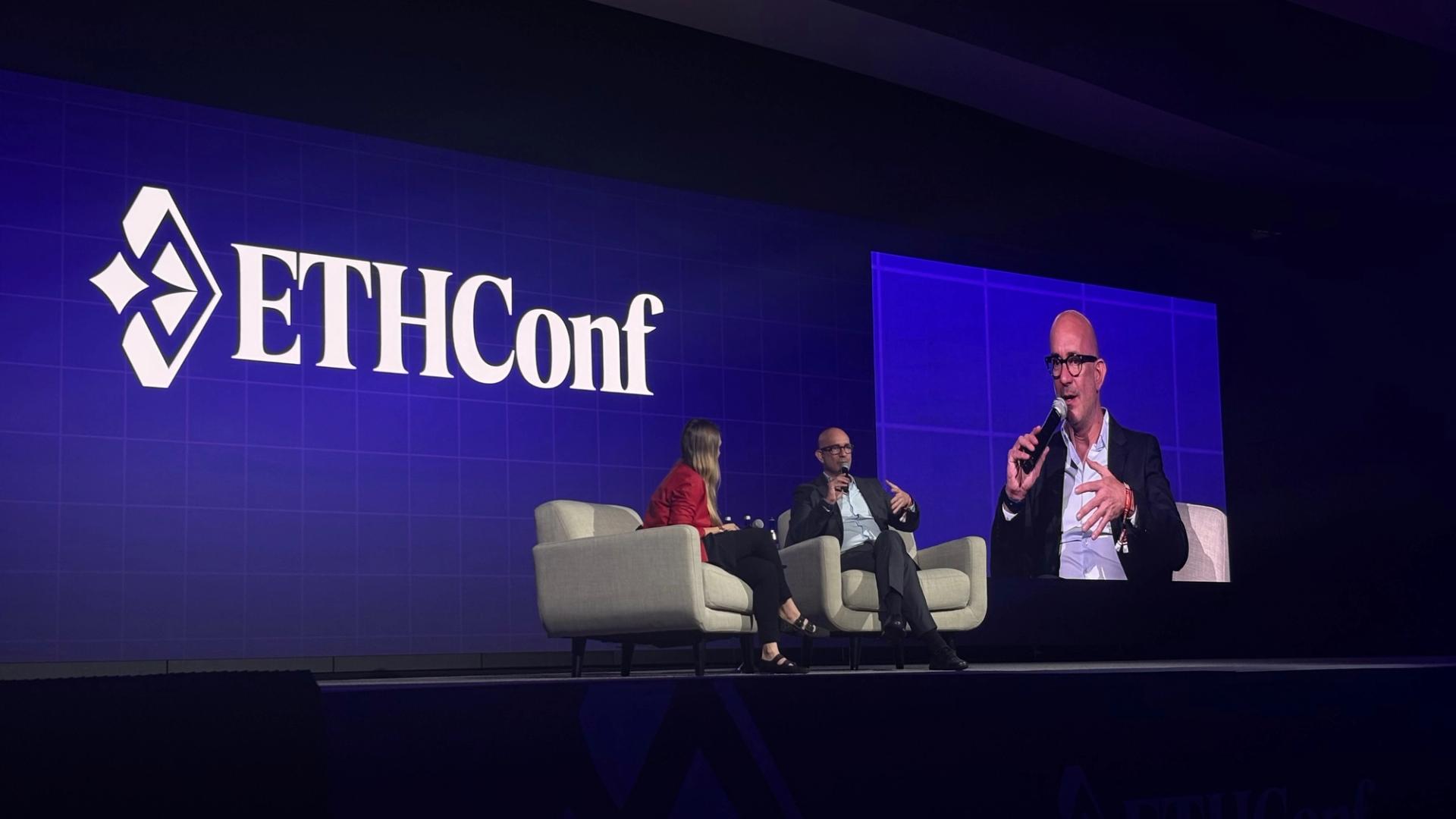
Carlos Domingo, CEO of Securitize, projects that tokenizing stocks and exchange-traded funds could create a $5 trillion market opportunity. Speaking at ETHConf, Domingo outlined how bringing traditional equities and ETFs onchain would dwarf the current $30 billion tokenized asset ecosystem.
The pitch centers on efficiency gains and accessibility. Tokenized securities trade 24/7, settle faster than traditional markets, and enable fractional ownership. These features appeal to retail investors locked out of high-ticket equities and institutions seeking deeper liquidity pools.
Securitize operates as one of crypto's leading tokenization platforms, having already launched tokenized versions of various assets. The company manages billions in tokenized securities and maintains regulatory compliance frameworks across multiple jurisdictions. Domingo's $5 trillion estimate reflects the total addressable market for global equities and ETF trading volume, not immediate adoption projections.
The narrative tracks broader institutional interest in onchain securities. Hong Kong and Singapore have pushed tokenization pilots. BlackRock has explored digital equity frameworks. Even traditional Wall Street firms now see blockchain infrastructure as a plausible upgrade to settlement and custody systems.
However, real-world adoption faces headwinds. Regulatory clarity remains patchy. Most jurisdictions still require equities to trade on licensed exchanges. Tax treatment of tokenized stocks remains uncertain in many regions. Liquidity networks between onchain and offchain markets remain fragmented.
The $30 billion baseline for current tokenized assets includes RWA tokens like Ondo Finance's tokenized Treasury funds and stable value instruments. Growth has accelerated in 2024 as institutional players committed capital to onchain yield products. But this remains microscopic compared to the roughly $110 trillion global stock market.
Domingo's framing suggests the crypto sector should view tokenization as an expansion vector rather than a replacement play. Instead of betting that blockchain obsoletes traditional markets, the bet becomes that blockchain infrastructure captures the settlement and trading layer, capturing basis points on massive volumes.
The timing reflects convergence pressures. Stablecoin adoption grows. Layer 2 networks offer sub-cent transaction costs. Institutional-grade custody solutions now exist. The infrastructure backbone supporting tokenized equities at scale now exists or is close to operational.
Full realization requires regulatory breakthroughs, not just technical readiness. Until major jurisdictions codify onchain equity trading, the $5 trillion opportunity remains theoretical. But the direction of travel appears set.