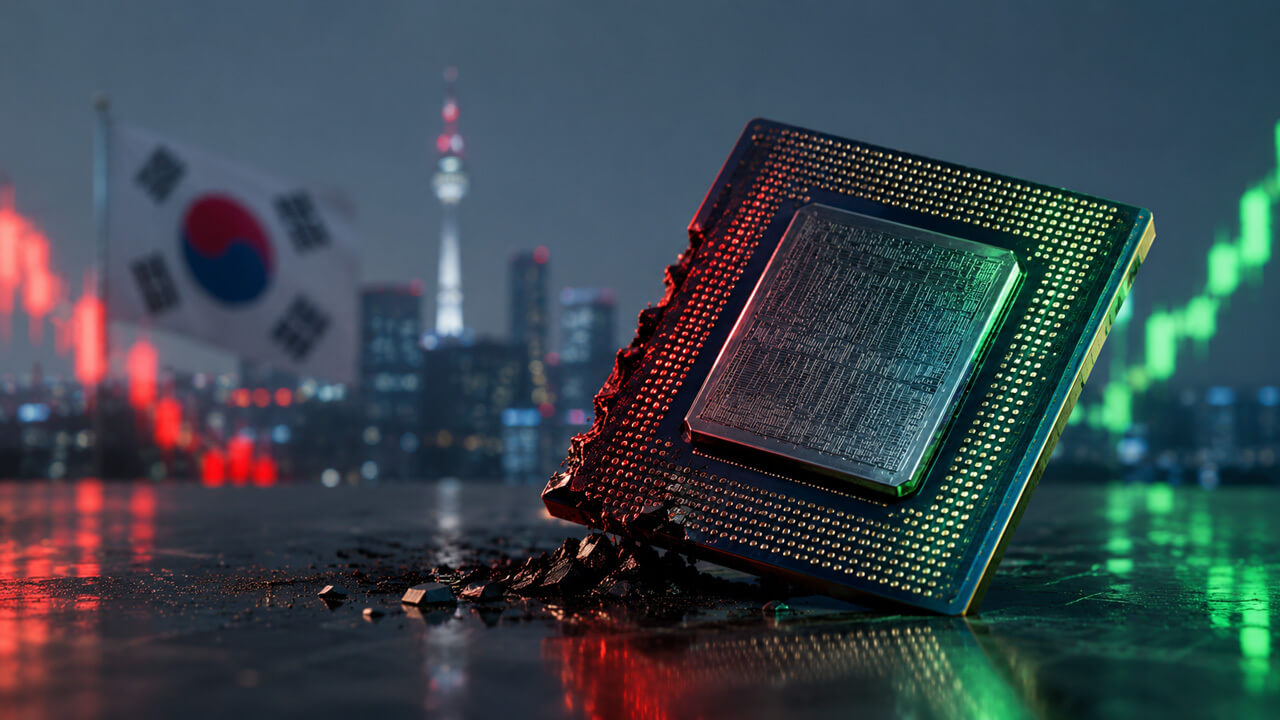
South Korea's KOSPI index swung nearly 17% over 48 hours this week, delivering one of the sharpest rallies and reversals in recent memory. The volatile move underscores how concentrated global capital has become in AI-related trades across traditional and crypto markets.
The KOSPI had ranked as 2026's best-performing major stock index, driven largely by South Korea's dominance in semiconductor manufacturing. Companies like Samsung Electronics and SK Hynix supply critical AI chips to major cloud providers and model developers worldwide. When sentiment shifted sharply lower earlier this week, the index plummeted on broad selloff fears. The rapid rebound that followed signals traders betting that the AI infrastructure boom remains intact despite near-term volatility.
This pattern extends well beyond South Korean equities. Bitcoin and other crypto assets have grown increasingly correlated with tech-heavy sentiment and semiconductor stocks as institutional investors treat digital assets as risk-on trades tied to the same AI and data center expansion themes. When the KOSPI tanked, Bitcoin faced immediate selling pressure. The rebound lifted crypto alongside broader risk appetite recovery.
The concentration risk embedded in this trade is stark. Nvidia dominates GPU supply for AI training and inference. Samsung and SK Hynix control memory chip production at scale. A handful of cloud platforms (Amazon Web Services, Google Cloud, Microsoft Azure) funnel spending toward these suppliers. Betting on AI growth increasingly means betting on these specific companies and countries. Add leverage, algorithmic trading, and retail FOMO into the mix, and sharp whipsaws become inevitable.
For crypto specifically, the 48-hour swing highlighted how deeply Bitcoin and Ethereum have entrenched themselves in broader growth narratives rather than operating as true hedges or uncorrelated assets. Bitcoin traded in lockstep with risk sentiment, not counter to it. Stablecoins and on-chain data showed massive liquidations during the sell-off and reaccumulation during recovery, typical of leveraged long positions getting flushed and rebuilt.
South Korea's central bank and government have taken note of the volatility in their key export sector. Policymakers remain focused on maintaining competitive advantage in chip supply chains while managing currency fluctuations tied to geopolitical tensions and capital flows.
The KOSPI's 17% swing in two days represents a warning: when everyone piles into the same bet (AI, semiconductors, cloud infrastructure), market microstructure can amplify moves in both directions. Investors holding Bitcoin as part of a diversified "AI boom" thesis need to recognize they are betting on sentiment, not diversification. If that thesis cracks, the moves could be far sharper than this week's preview.