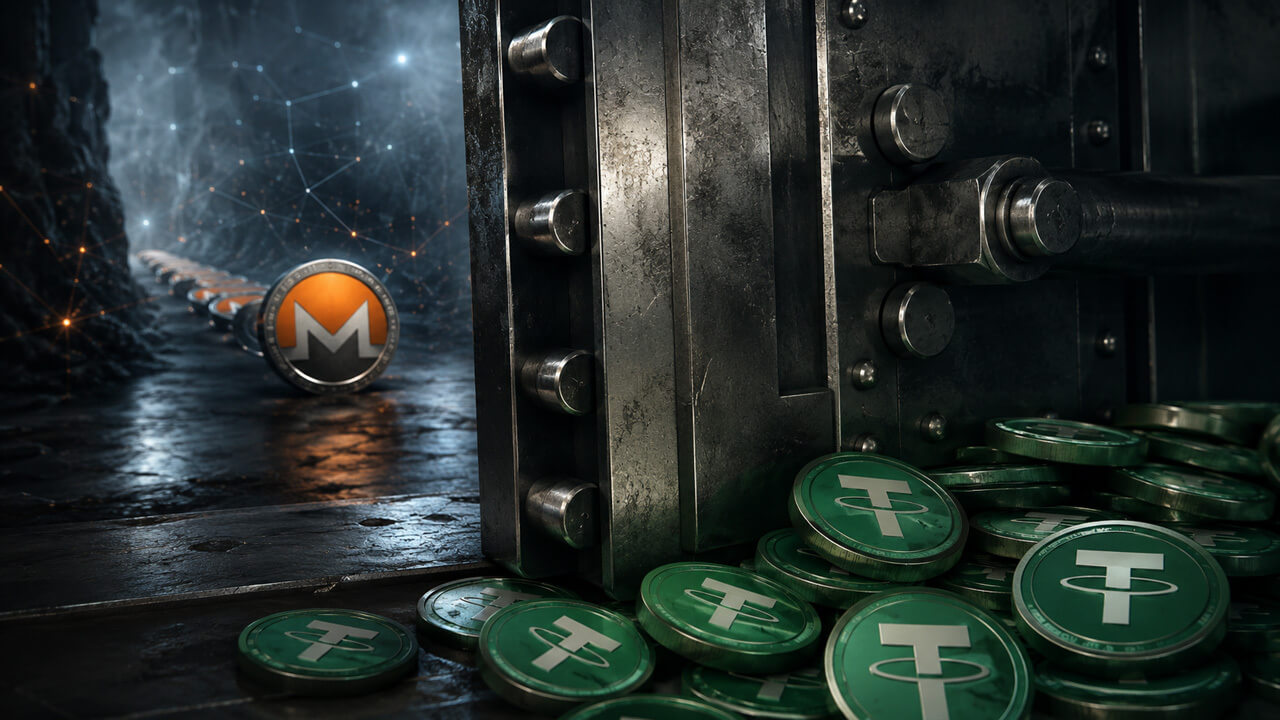
Tether froze approximately $72 million in USDT tokens following a $120.2 million transaction that routed through Monero, the privacy-focused cryptocurrency. The freeze occurred without any confirmed connection to a security breach, raising questions about whether Tether acted on suspected money laundering activity linked to the privacy coin's use case.
The incident underscores a critical dynamic in stablecoin ecosystems. When holders move capital through privacy protocols like Monero, they intentionally obscure transaction trails that remain transparent on public blockchains. After emerging from Monero, approximately 60 percent of the USDT involved faced asset freezes from Tether, the issuer of the second-largest stablecoin by market cap.
Tether maintains the technical ability to freeze USDT balances at specific addresses. The company has frozen tokens in the past following law enforcement requests or in response to detected theft. However, this instance stands out because no hack surfaced beforehand, and the freeze appeared preventative rather than reactive. The timing suggests Tether may have acted on intelligence about illicit fund flows or money laundering patterns connected to privacy coin mixing.
This move carries broader implications for cryptocurrency's utility in cross-border payments and privacy-conscious transactions. Privacy coins like Monero (XMR) serve legitimate use cases but remain tools for criminals seeking to obscure the source and destination of funds. Regulators in multiple jurisdictions have increased scrutiny of privacy-focused assets, with some exchanges delisting them entirely. Tether's freeze demonstrates how centralized stablecoin issuers can effectively counteract privacy coin strategies by blocking on-chain addresses downstream.
The market reacted swiftly. The incident reinforced awareness that stablecoins, despite their blockchain infrastructure, retain custodial risk. Unlike decentralized protocols that cannot freeze assets, USDT holders depend on Tether's discretion regarding asset access. The $72 million freeze showed liquidity can move toward harder-to-trace alternatives when regulatory pressure tightens on transparent rails.
Tether has not issued public statements about the freeze or its justification. The lack of transparency creates uncertainty about whether similar freezes may occur and under what specific conditions. For users routing funds through privacy protocols, the message rings clear. Emerging from Monero into Tether-issued stablecoins offers no guarantee of continued access to those funds. This reality may accelerate migration toward decentralized stablecoins or privacy-native alternatives, though liquidity remains significantly tilted toward USDT.