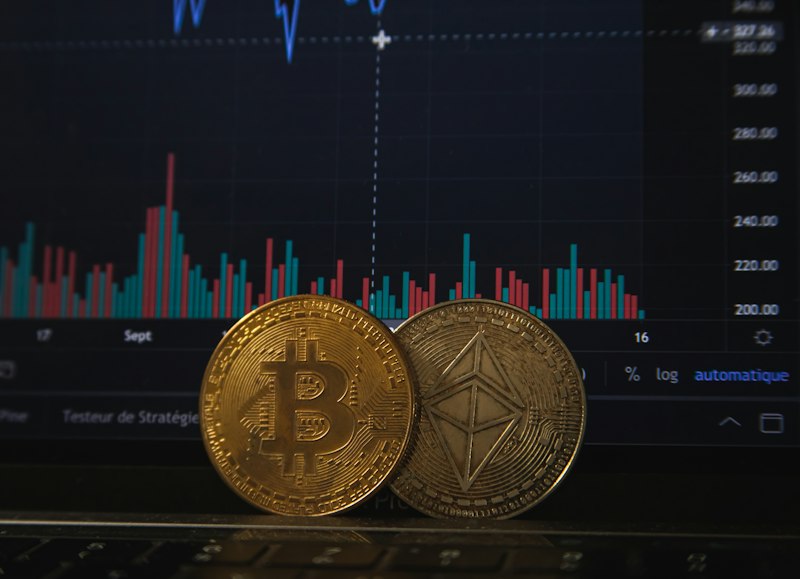
We're obsessed with the wrong numbers. Every time Bitcoin ticks up or down a few thousand dollars, financial media erupts with urgency. The recent volatility around geopolitical tensions, Federal Reserve decisions, and artificial intelligence developments has dominated headlines. But this fixation on price movement obscures a far more significant structural shift: Bitcoin is quietly transitioning from a speculative asset into something closer to institutional financial infrastructure.
The price gyrations we see in headlines represent genuine economic activity, certainly. But they also represent noise that obscures the actual story. When Bitcoin moves 2-10% in a day, most commentary treats it as a breaking news event. Yet the real structural transformation happening underneath these fluctuations barely registers as noteworthy.
Consider what's changed in the past five years. Bitcoin's infrastructure has matured substantially. Custody solutions have improved. Regulatory frameworks, while still developing, are becoming clearer in major jurisdictions. Most importantly, institutional investors are treating Bitcoin not as a get-rich-quick scheme but as a portfolio diversification tool with specific risk-return characteristics. That's a fundamental shift from the retail speculation that dominated earlier eras.
The current volatility patterns reveal this transition in action. When markets experience broader stress, Bitcoin sometimes moves inversely to stock indices. Other times it moves in tandem. This inconsistency frustrates traders seeking predictable correlations, but it actually signals something important: Bitcoin is becoming genuinely heterogeneous in how different investors use it. Some treat it as a hedge. Others view it as a risk-on asset. Still others hold it as a strategic reserve. These different use cases produce different price signals depending on which investor group is most active.
This structural heterogeneity matters more than any single day's price action. It suggests Bitcoin is embedding itself into financial markets in ways that won't reverse, regardless of whether the price goes to $100,000 or $40,000. The infrastructure, the regulatory clarity, the institutional participation, the custody solutions: these don't disappear in a bear market.
The media focus on volatility creates a false narrative about significance. We treat price movements as economic news when they're often just noise from markets still finding equilibrium around an asset with genuinely uncertain valuation models. There's no perfect way to price an asset with no cash flows and no intrinsic value calculation. Price discovery in Bitcoin remains real and ongoing.
What's actually worth your attention is whether Bitcoin continues consolidating as financial infrastructure. Is transaction volume on layer-two solutions growing? Are corporations maintaining strategic Bitcoin holdings through market cycles? Are custody solutions becoming more standardized? Are more institutional investors allocating meaningful portfolio percentages to Bitcoin specifically because of its characteristics, not because of short-term price momentum?
These questions lack the dramatic immediacy of price swings. They won't generate urgent breaking news alerts. But they determine Bitcoin's actual trajectory within financial systems far more than whether it's at $65,000 or $55,000 on any given Tuesday.
The volatility obsession also creates a perverse dynamic where price stability signals boring consolidation when it might actually signal strength. Periods where Bitcoin trades in a narrow range while adoption metrics improve represent real progress. They just don't produce exciting headlines.
None of this constitutes investment guidance. Bitcoin remains a volatile, speculative asset with genuine risks. But the structural transformation from pure speculation toward something resembling financial infrastructure is worth recognizing separately from daily price movements. When you see headlines about Bitcoin's latest percentage swing, ask yourself: what's actually changing about how Bitcoin functions in financial systems? That answer matters more than the price.