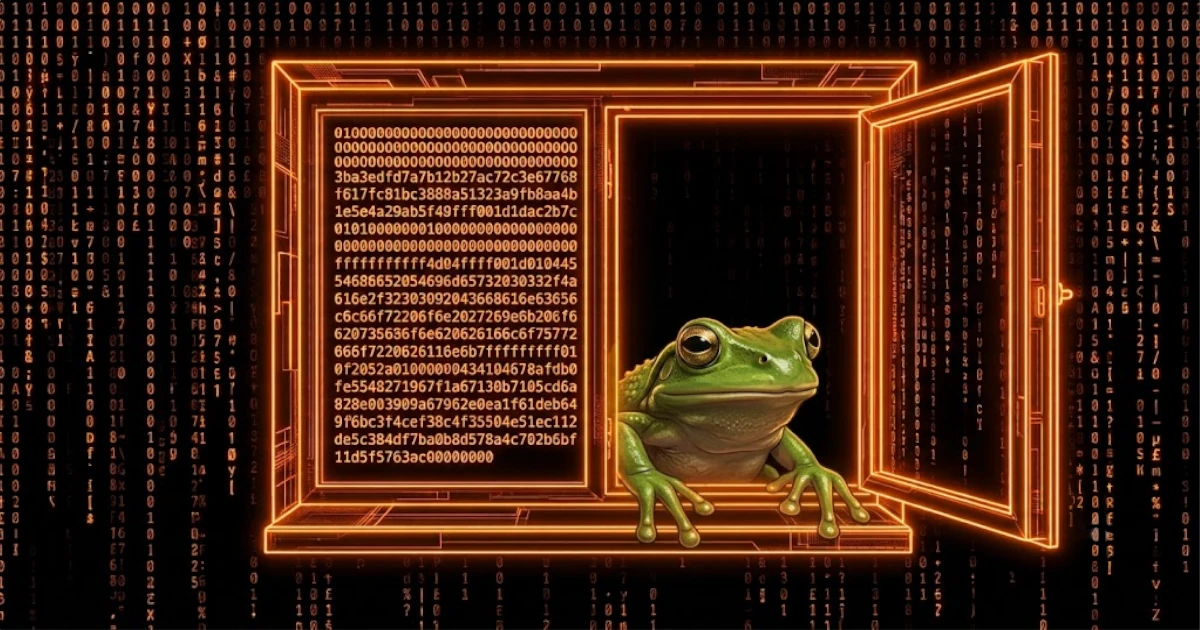
A researcher scanned Bitcoin's entire blockchain and extracted embedded image data, raising questions about what content persists on the network and the storage burden it creates for node operators.
The analysis took three days of validation followed extensive deep scanning. The researcher discovered images encoded directly into Bitcoin's transaction data, likely embedded through OP_RETURN outputs or other data-carrying mechanisms that don't require coin transfer. Bitcoin allows users to store arbitrary data on-chain, and several kilobytes per transaction can hold encoded images or other files.
This finding highlights a practical tension in Bitcoin's design. While the blockchain's immutability attracts legitimate use cases, it also creates permanent storage of content that node operators must download and validate. Running a full Bitcoin node already requires over 600GB of disk space. Every additional megabyte of embedded data increases this baseline, forcing every future node operator to store that content indefinitely.
The discovery underscores debates within Bitcoin's developer community about blockchain bloat. Some argue for strict data limits to preserve network efficiency and decentralization. Others accept data embedding as an inevitable trade-off for Bitcoin's censorship resistance. The protocol already supports this functionality, so stopping it would require consensus-level changes that most developers consider unfeasible.
On-chain data storage has precedent across crypto networks. Ethereum saw similar experiments with image embedding through smart contracts. Stacks and Ordinals on Bitcoin layer on more sophisticated methods for permanent content timestamping, marketed as "digital artifacts."
The practical implications matter for node operators running on consumer hardware. Every archived image, meme, or metadata file reduces the economic efficiency of running validation infrastructure. This could gradually push node operation toward larger institutional players with server-grade hardware rather than home users.
The researcher's findings don't reveal illegal content but do force honest examination of whether Bitcoin's permanence serves all use cases equally. The network tolerates this storage cost today, but scaling limitations and storage economics may shift incentives around what data belongs on-chain.