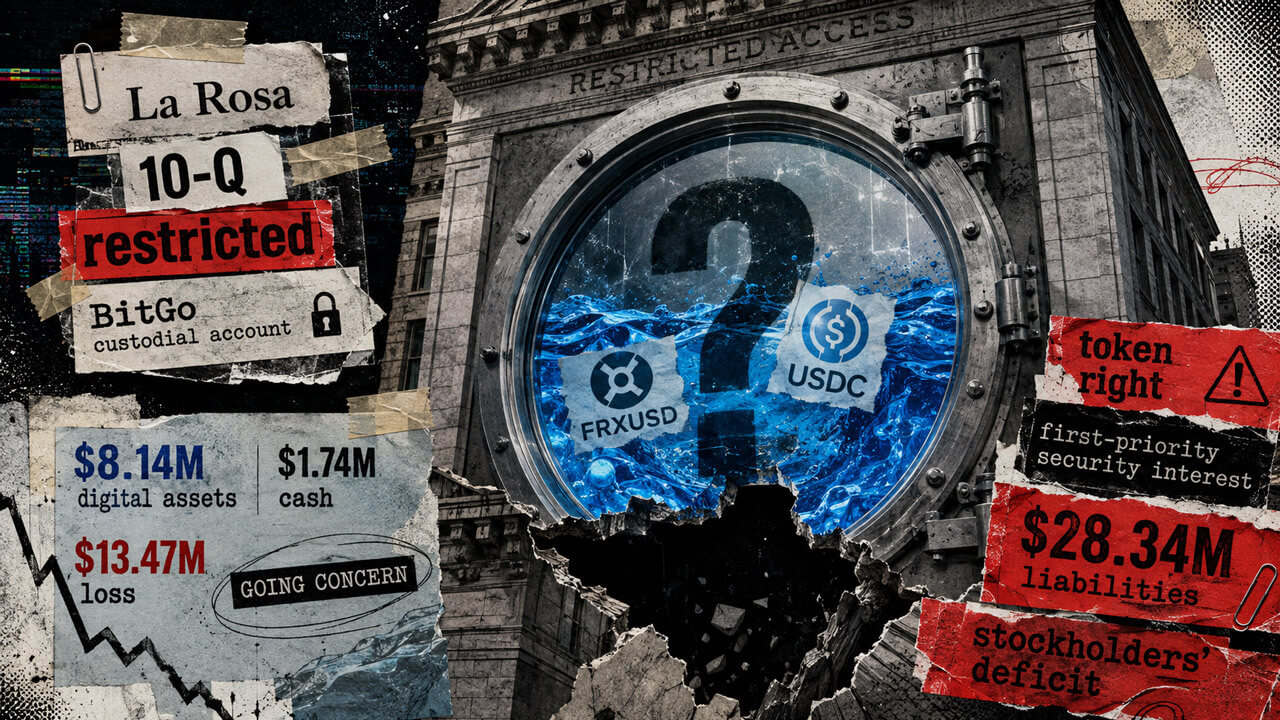
A struggling real estate firm has poured $8 million into cryptocurrency holdings despite financial turmoil that includes three reverse stock splits and a $13.5 million loss. The company now faces a critical liquidity problem. Its entire crypto balance sits under restrictions, with legal liens and token rights claims clouding the actual amount it can freely access.
The firm's position reflects desperation more than strategy. After consecutive reverse stock splits signal shareholder dilution and losses mounting into nine figures, management turned to digital assets as a potential recovery play. The $8 million crypto bet represents a high-risk pivot for a company already bleeding value.
The restriction on the full crypto balance creates an opaque situation. Scoped liens and competing token rights claims leave the freely usable portion undisclosed. This obscurity matters because the company may not retain withdrawal rights over assets it technically holds. Lien holders and other claimants could block or claim priority over these funds, leaving management unable to liquidate positions if needed.
The timing raises red flags. Real estate firms typically avoid crypto allocations when facing operational challenges. This move suggests either institutional pressure forcing diversification or desperation to find an exit from deteriorating fundamentals. Either way, the restricted status of these holdings indicates the company lacks clean title or unrestricted access.
For investors, the situation underscores broader risks in distressed company crypto strategies. A firm managing three reverse stock splits simultaneously exhibits severe distress. Adding an $8 million crypto position with undisclosed withdrawal capabilities introduces yet another layer of opacity to the balance sheet.
The cryptocurrency holdings may prove inaccessible precisely when the company needs liquidity most. If asset prices decline or legal claims accelerate, this $8 million position could evaporate entirely. The company faces a double squeeze. earnings deteriorate while its crypto safety net remains locked away by liens and restricted rights.