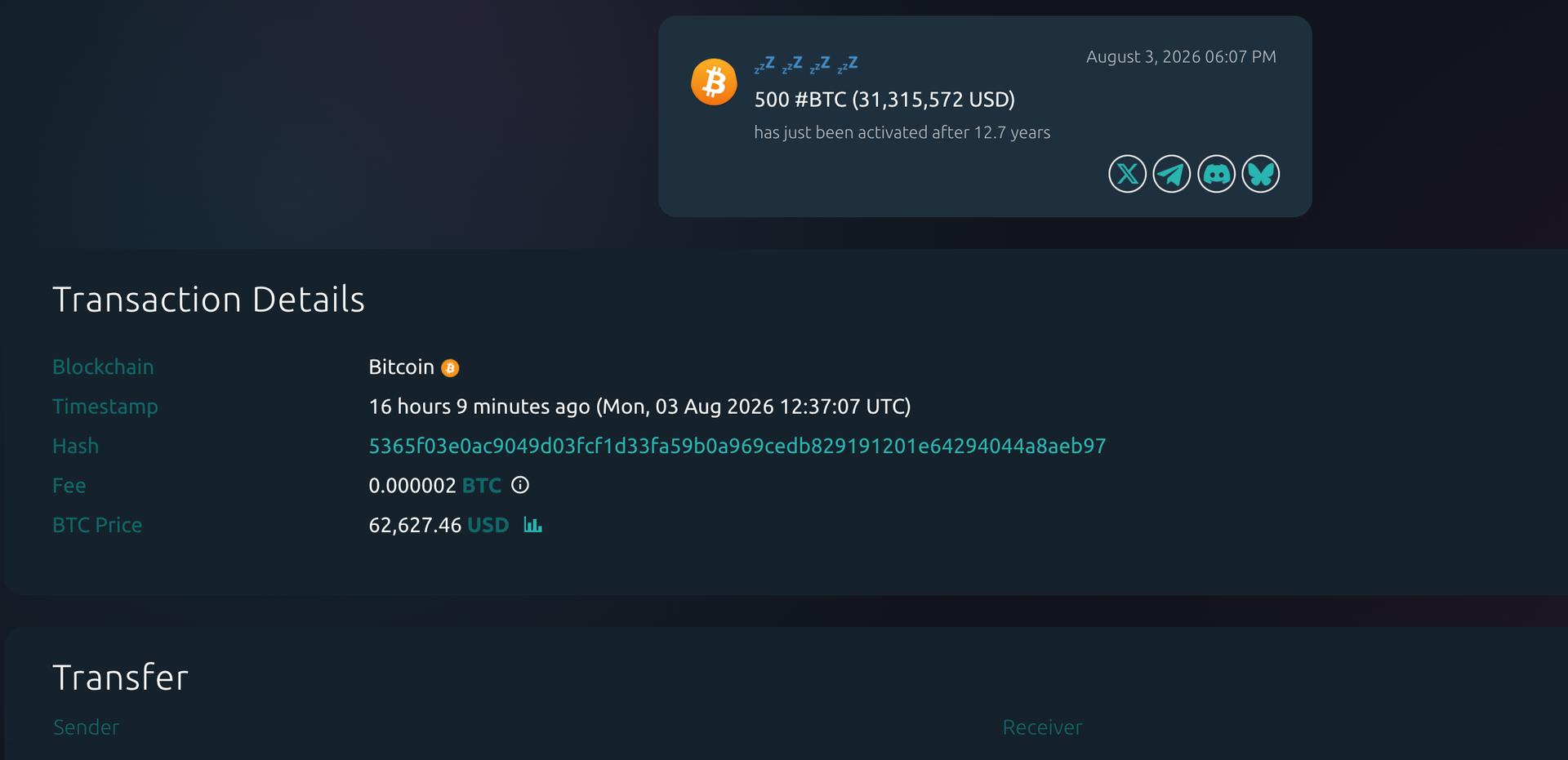
A Bitcoin wallet inactive since 2013 moved $31 million worth of BTC on Monday, signaling renewed activity among long-sleeping addresses. The transaction marks part of a larger pattern of dormant coins waking up following the Coldcard hardware wallet security breach discovered recently.
The Coldcard incident exposed vulnerabilities in one of the most popular hardware wallets for self-custody, prompting holders to reassess their security posture. Some early Bitcoin adopters and institutional players with aging cold storage solutions have begun shifting funds to new addresses or modern hardware alternatives as a precautionary measure.
Dormant wallet movements typically trigger speculation about market timing. When holders of ancient coins move them after years of inactivity, markets watch closely for signs of capitulation or confidence shifts. A 2013-era wallet represents Bitcoin from the sub-$200 era, meaning the mover likely has substantial unrealized gains. Monday's transaction suggests either a security upgrade or potential selling pressure.
The broader wave of dormant coin activity extends beyond this single wallet. On-chain analysts reported multiple long-sleeping addresses transferring balances simultaneously, consistent with a coordinated response to the Coldcard vulnerability. The hardware wallet maker acknowledged the flaw and urged users to upgrade firmware, but the damage to confidence appears material.
Coldcard users face a dilemma. The device maintains strong security credentials and user control over private keys, but the recent hack undermines trust in its implementation. Users with significant holdings stored on older Coldcard versions have incentive to migrate to alternatives like Ledger, Trezor, or offline air-gapped solutions entirely.
Bitcoin price action remained relatively stable following the dormant wallet movement, holding near $42,000. Historically, whale transactions from ancient addresses can spark volatility, but this wave appears absorbed without dramatic cascades. Market depth suggests institutional buyers remain present at current price levels.
The Coldcard situation crystallizes a persistent hardware wallet challenge. Users must trust not just cryptographic principles but the entire supply chain, firmware integrity, and manufacturer incentives. When trust breaks, even legacy wallets with perfect operational security records face exodus