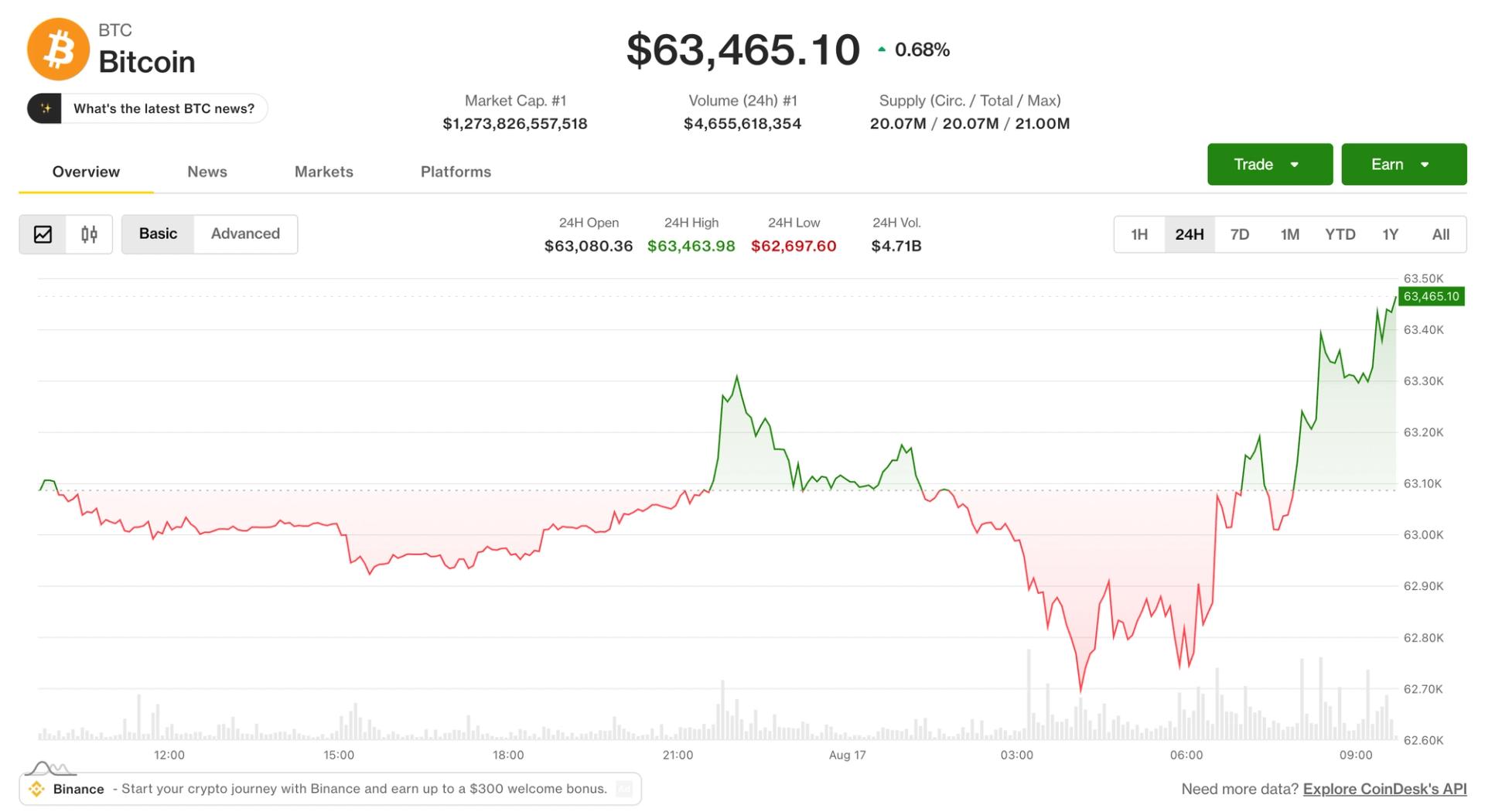
Bitcoin climbed above $64,000 in early Asian trading Sunday, extending gains from the previous session. The move reflects renewed buying pressure across major crypto assets, though the weekly picture remains mixed for top-tier tokens.
Ether, XRP, and Solana all posted losses over the past seven days despite Sunday's rallies. Bitcoin itself sits underwater on the week, suggesting profit-taking after recent strength. The intraweek volatility points to macro uncertainty and possible position rotation among traders.
HYPE emerged as a standout performer, jumping 8 percent over the weekly period. The token's outperformance against bitcoin and ether indicates capital flowing into smaller-cap or alternative assets. This pattern often signals risk-on sentiment in crypto markets, though such rotations frequently reverse quickly.
Sunday's gains across the broader market came as traditional finance enters a new week. Asian markets' opening typically triggers fresh momentum in crypto, particularly for bitcoin, which has shown correlation with equity futures ahead of US trading sessions. The $64,000 level represents a key resistance zone that buyers attempted to defend, though follow-through remained limited.
The weekly losses for major tokens reflect headwinds from macroeconomic factors, regulatory developments, or profit-taking from institutional investors. Solana's underperformance against bitcoin suggests weakness in the smart contract ecosystem, while XRP's decline contradicts some recent positive catalysts around Ripple's litigation victories.
Trading volume data will clarify whether Sunday's bounce carries conviction or represents a temporary relief rally. On-chain metrics for bitcoin wallets holding long-term positions and exchange inflows will determine if this upside move attracts genuine accumulation or remains a seller's bounce.
The divergence between HYPE's strength and major token weakness underscores crypto's fragmented market structure. Retail and institutional traders are clearly reassessing portfolio allocations, with smaller projects attracting speculative capital while blue-chip assets consolidate.