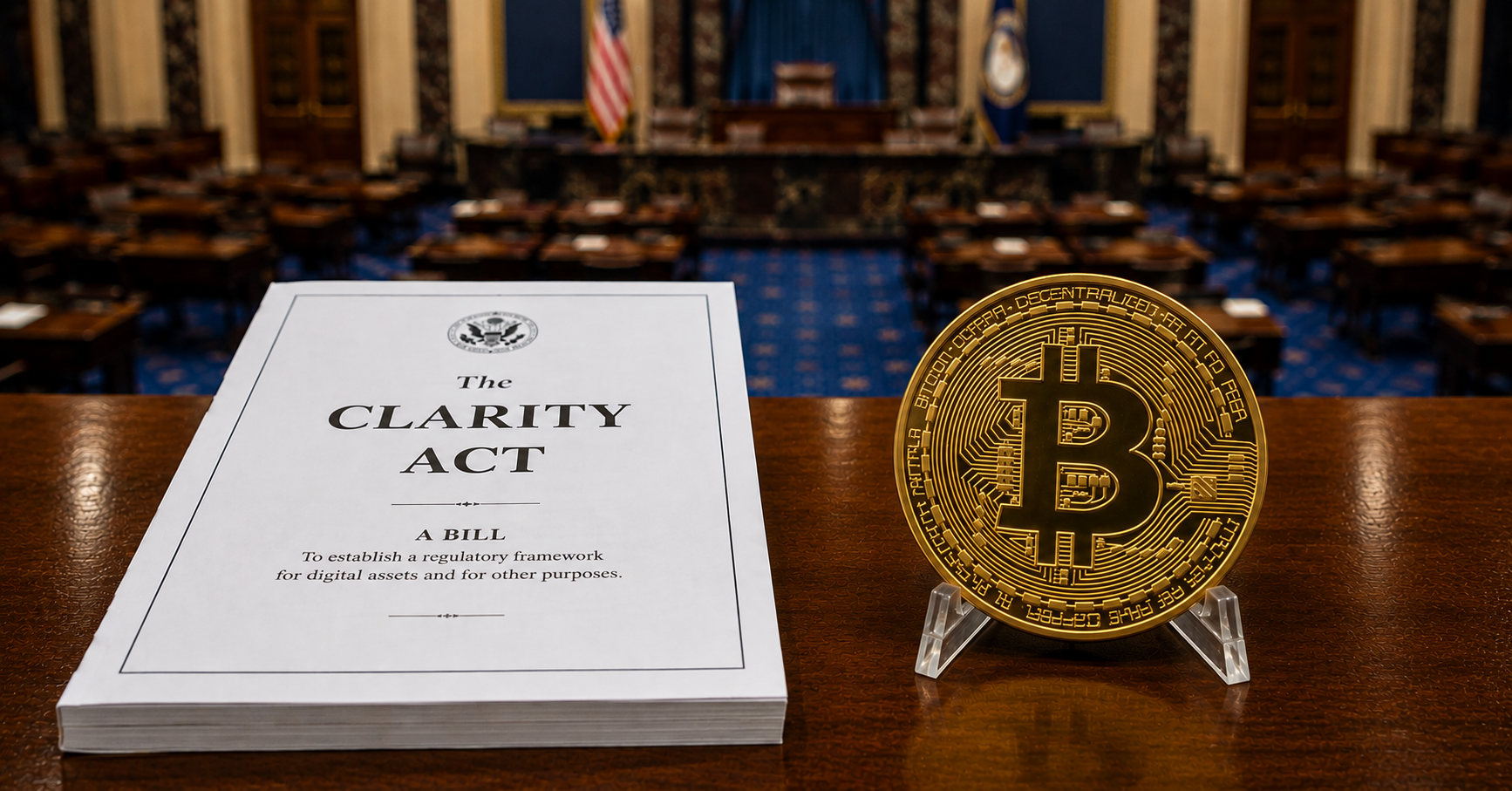
The CLARITY Act represents a 256-page legislative framework designed to establish clearer regulatory boundaries for bitcoin and digital assets rather than serve as a direct price catalyst. The legislation addresses a core pain point for the bitcoin industry: regulatory uncertainty has created operational friction across custody, mining, and exchange infrastructure.
The act defines bitcoin explicitly as a commodity, removing ambiguity that previously allowed regulators like the SEC and CFTC to claim overlapping jurisdiction. This distinction matters operationally. Mining operations gain clearer tax treatment. Self-custody platforms face reduced compliance burden. Exchanges holding bitcoin as collateral operate under explicit commodity rules rather than securities frameworks that treated certain custody structures as problematic.
The legislation also establishes guardrails around stablecoin issuance and clarifies which digital assets qualify as securities under Howey test principles. For bitcoin specifically, the commodity designation removes the threat of SEC enforcement actions targeting bitcoin as an unregistered security, a concern that plagued the asset class during periods of regulatory ambiguity.
However, the CLARITY Act does not unlock immediate market catalysts. It does not establish a regulatory framework for spot bitcoin ETF approvals, which have already been approved. It does not mandate federal banking access for bitcoin businesses, though it reduces barriers. It codifies market structure that already exists de facto in major jurisdictions.
The real value lies in permanence. Previous regulatory wins in the U.S. bitcoin market came through incremental SEC approvals and Treasury guidance. The CLARITY Act attempts to enshrine bitcoin's commodity status in statute, making reversals more difficult. This reduces tail risk for institutional investors worried about sudden policy shifts.
For miners and node operators, the act clarifies that bitcoin network participation does not trigger money transmitter licenses. For users, self-custody remains legally protected. These protections accumulate into a more stable operating environment rather than a binary win.
The legislation passed with bipartisan support, signaling that bitcoin's regulatory status has moved from ideological battleground to technical infrastructure question. Price rarely responds to regulatory clarity alone. Adoption and scarcity drive valuation. But stable rules let builders build