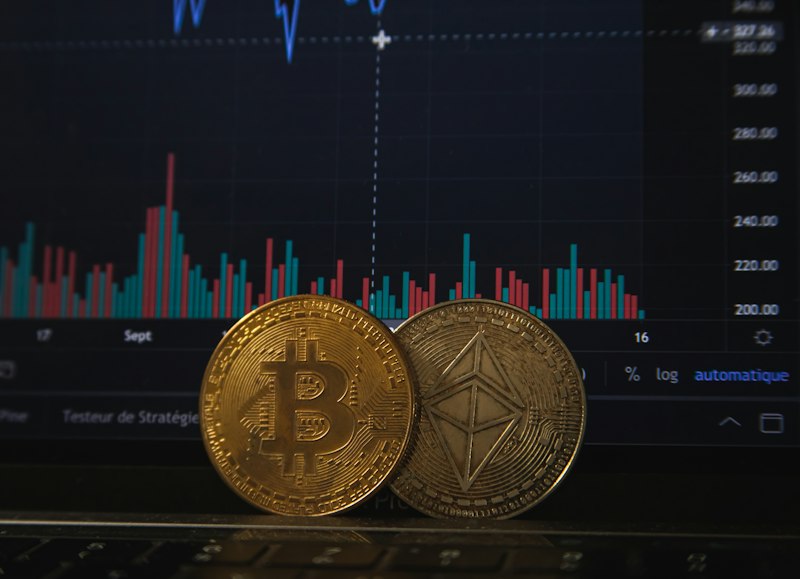
The bitcoin market is drowning in noise, and nobody seems willing to admit it.
Watch what happens every time the price moves. Analysts immediately surface with price targets that swing wildly depending on which data point they're emphasizing. One forecaster sees eighty-three grand ahead. Another warns of a forty-four thousand bottom. Both claim technical rigor. Both can't both be right, yet both continue to command audience attention.
This isn't analysis anymore. This is theater.
The real problem plaguing bitcoin adoption isn't the asset's inherent volatility or its price discovery mechanism. It's the ecosystem of intermediaries, platforms, and prediction merchants who have built their entire business model around making bitcoin seem more complicated than it is. Each layer adds fees, friction, and contradictory narratives. Each gatekeeper insists their interpretation is the only one worth your attention.
Consider what someone genuinely curious about bitcoin must navigate today. They encounter futures markets and spot prices diverging. They read conflicting macroeconomic arguments about whether bitcoin moves with stocks or against them. They see legitimate institutions suddenly treated as authorities on assets they only recently began studying. The barrier to forming an independent view isn't the technology anymore. It's the noise.
The winners in this space won't be the ones adding another layer of hype, another prediction framework, or another app promising to decode the "real" bitcoin signal. They'll be the operators who ruthlessly simplify the proposition and deliver clarity without condescension.
This could look like education platforms that teach the mechanics without pushing a directional view. It could look like custody solutions that prioritize transparency over tribal loyalty. It could look like data tools that present information neutrally instead of burying inconvenient context. The operators who thrive will be those willing to serve user interests even when simplification costs them engagement metrics or trading volume.
Some bitcoin advocates won't like this analysis. They've invested their credibility in complex narratives. They've built audiences around the idea that bitcoin requires sophisticated interpretation. But that gatekeeping model is increasingly brittle.
Consider the recent market dynamics: even as predictions diverge wildly, price action continues regardless. Traders and investors who needed certainty before acting have largely made their decisions. Those still sitting on the sidelines aren't waiting for better forecasts. They're waiting for complexity to disappear.
The institutional adoption narrative has matured enough that bitcoin's basic case is understandable without advanced financial knowledge. Digital scarcity is intuitive. Decentralized settlement has clear value propositions. The volatility is real but also manageable within portfolio contexts that don't require PhD-level analysis to grasp.
What's left is to strip away the unnecessary layers.
This means treating price prediction as speculation, not analysis. It means acknowledging that correlation patterns shift and no framework captures them permanently. It means building services around what bitcoin actually does rather than what someone wishes it might do.
The market will eventually reward clarity over complexity. That's not because bitcoin's technical details will become less important. It's because the human beings making allocation decisions will increasingly recognize that gatekeepers profiting from confusion aren't aligned with their interests.
The operators who simplify that dynamic will become indispensable. Everyone else is just adding more noise to a system that's already struggling to hear itself think.