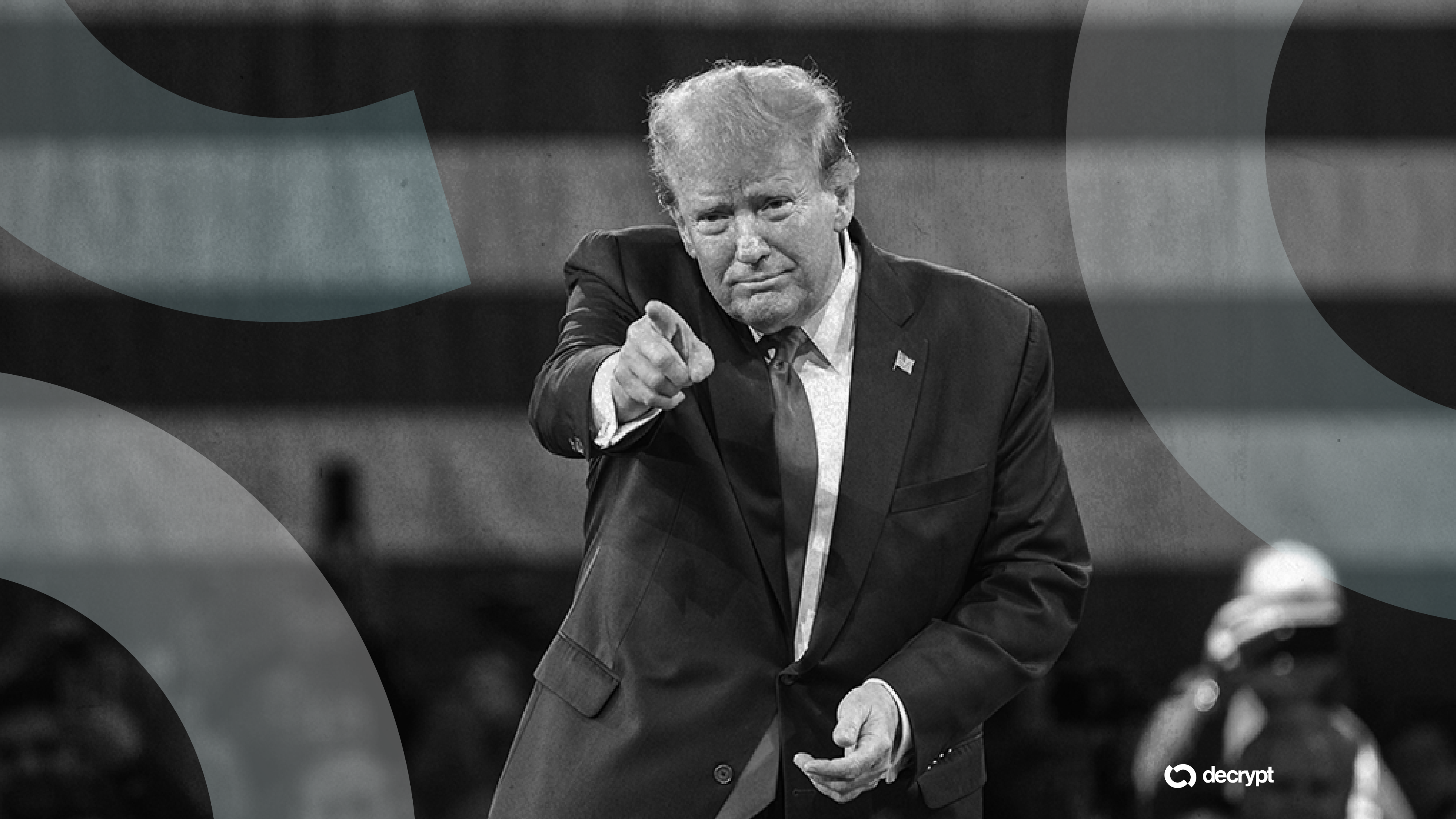
President Trump called on Congress to pass a "fair version" of the Clarity Act during a White House meeting focused on cryptocurrency policy, signaling his administration's push for clearer digital asset regulation. Trump emphasized his government's commitment to fostering crypto innovation while maintaining compliance standards.
The administration confirmed it is actively working with regulators to facilitate Hyperliquid's entry into the U.S. market under a compliant framework. Hyperliquid, a decentralized perpetuals trading protocol built on its own blockchain, has gained traction as a high-performance alternative to centralized exchanges. The protocol processes substantial trading volume but has faced regulatory scrutiny regarding its status as a derivatives platform.
Trump's backing of the Clarity Act represents a shift toward legislative clarity around token classification. The act aims to establish clear distinctions between commodities, securities, and other digital asset categories, potentially reducing regulatory ambiguity that has plagued the crypto industry. His emphasis on a "fair version" suggests negotiations around specific provisions that could either benefit or restrict certain market participants.
The White House meeting reflects the administration's broader positioning as crypto-friendly compared to the previous Biden administration. Trump's crypto policies have included support for Bitcoin strategic reserves and opposition to blanket restrictions on digital asset banking services. However, the focus on bringing Hyperliquid into compliance suggests the administration intends to maintain regulatory guardrails rather than eliminate them entirely.
Hyperliquid's potential U.S. launch carries significant implications for the derivatives trading sector. The protocol offers perpetual futures with leverage, currently operating in international markets. A compliant U.S. framework could either expand access or impose limitations depending on how regulators classify the protocol's functions.
The Clarity Act has bipartisan support in Congress, with sponsors arguing it prevents regulatory overreach while protecting consumers. Token classification disputes have historically delayed approval, but Trump's direct congressional push may accelerate legislative movement. The administration's willingness to work within regulatory frameworks while advancing crypto adoption suggests a pragmatic approach to industry integration.