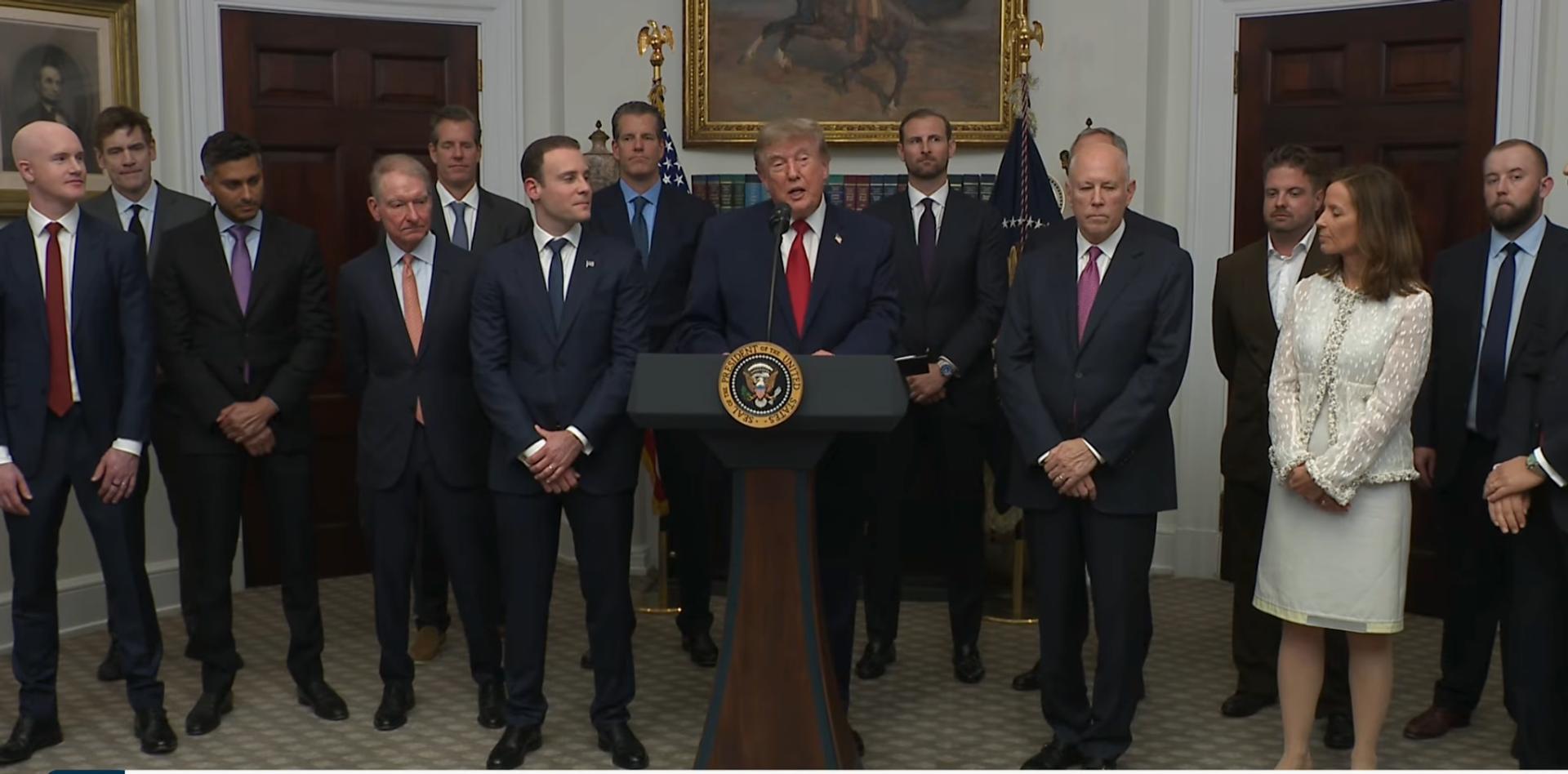
President Trump convened crypto industry leaders at the White House to accelerate passage of the Clarity Act, landmark legislation that would clarify regulatory jurisdiction between the SEC and CFTC over digital assets. The push comes as the newly formed Innovation Advisory Committee prepares its first meeting at the Commodity Futures Trading Commission this week.
Trump's direct intervention signals momentum for crypto regulation that the industry has sought for years. The Clarity Act, sponsored by Sen. Ron Wyden and Rep. Dave Joyce, establishes the CFTC as primary regulator for digital commodities while the SEC retains authority over securities-classified tokens. This framework addresses a major pain point for exchanges and protocols operating under regulatory ambiguity.
CEO participation from major crypto platforms underscores industry alignment on the bill. The framework would reduce compliance costs and provide clearer guardrails for token launches and trading venues. Currently, projects navigate conflicting guidance from both agencies. The SEC has treated most tokens as securities, while the CFTC handles derivatives and commodity futures.
Trump's administration has positioned itself as crypto-friendly since his campaign pledges to prevent a "CBDC surveillance state" and create a national Bitcoin strategic reserve. His appointment of crypto advocates to key positions signals follow-through on those promises. The White House event demonstrates executive support for legislative clarity rather than regulatory overreach.
The timing aligns with broader congressional appetite for crypto bills. The House passed the Financial Innovation and Technology for the 21st Century Act (FIT21) in May, establishing similar regulatory guardrails. The Clarity Act complements this framework by resolving turf wars that have paralyzed enforcement certainty.
Passage would reshape token markets. Projects currently sidestepping U.S. markets due to SEC enforcement actions might return. Exchanges could expand offerings without legal ambiguity. Staking, lending, and other DeFi protocols operating in gray zones would gain clarity on compliance requirements.
Congressional momentum remains uncertain despite White House backing. Industry lobbying and regulatory alignment now face the legislative calendar. But Trump's direct advocacy removes a major barrier. The president's political capital on crypto is