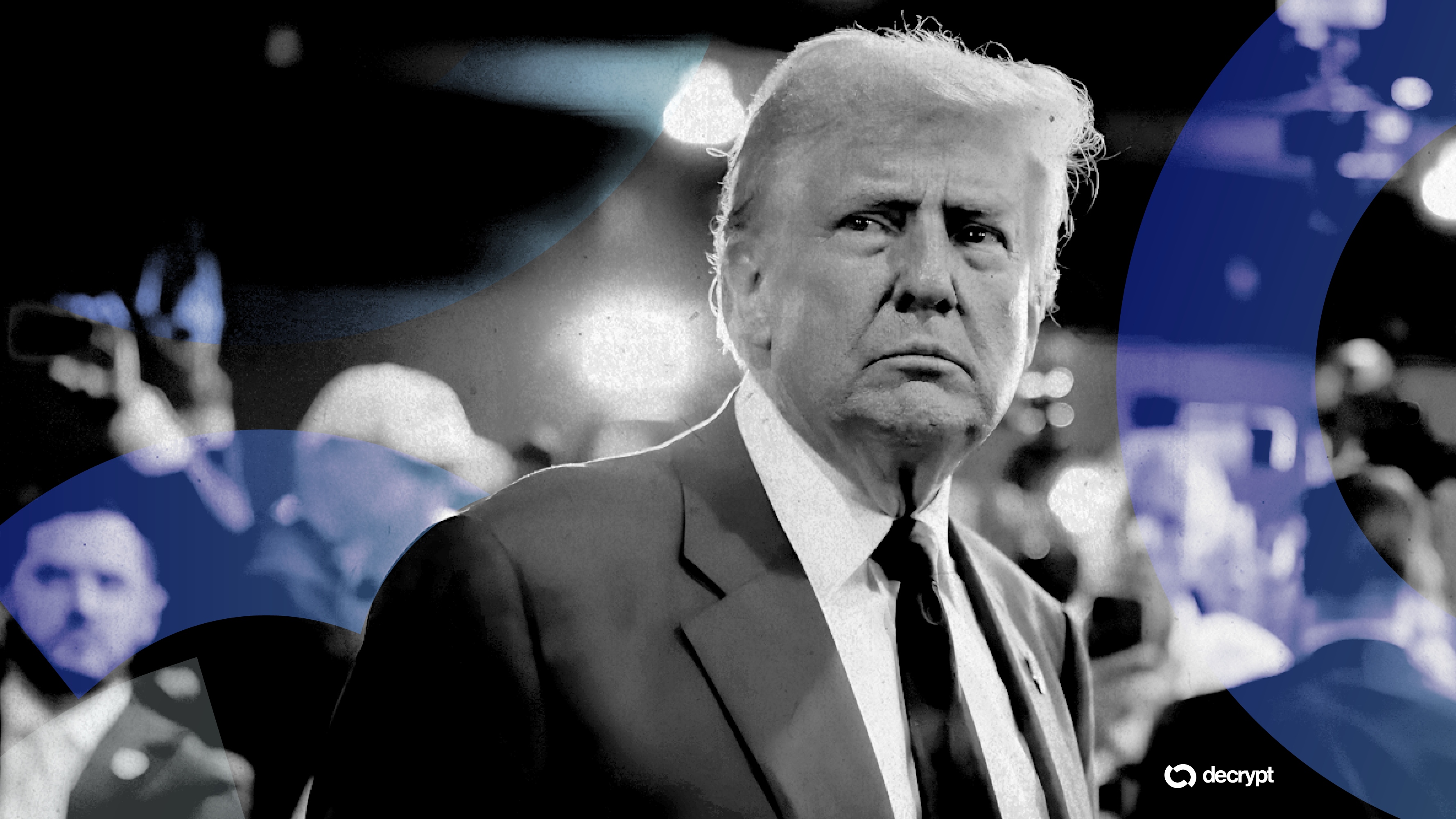
President Trump positioned artificial intelligence as transformative infrastructure during remarks defending minimal regulatory constraints on the sector. He claimed the U.S. maintains substantial advantages over China in AI development and justified accelerated deployment of data centers and power generation capacity to support the industry's expansion.
Trump's comments align with his administration's broader deregulation agenda. He framed light-touch oversight as essential for maintaining American competitiveness in AI, arguing that restrictive policies risk ceding leadership to rival nations. The statement reflects ongoing tension between rapid innovation and regulatory caution in emerging tech sectors.
The remarks carry implications for crypto markets beyond direct AI exposure. Regulatory philosophy toward emerging technologies influences broader digital asset policy. An administration favoring minimal intervention in AI development signals similar posture toward blockchain infrastructure, decentralized finance, and Web3 projects. This stance contrasts sharply with the Biden administration's more cautious approach to crypto regulation.
Data center and energy infrastructure development underpins both AI and blockchain operations. Power grid constraints have emerged as limiting factors for AI scaling, particularly as compute demands accelerate. Cryptocurrency mining similarly competes for electrical capacity, making Trump's emphasis on rapid power plant construction relevant to digital asset mining economics.
The positioning also reflects geopolitical dimensions affecting crypto markets. U.S. versus China technological competition influences regulatory frameworks globally. Countries prioritizing innovation velocity tend toward lighter regulation across emerging technologies, including digital assets. Trump's explicit framing of AI competition as existential shapes policy cascades across tech sectors.
Crypto markets historically respond positively to deregulation signals and competitive posturing against regulatory rivals. Digital asset infrastructure requires similar power and data center resources as AI systems. Aligned regulatory philosophy on innovation velocity and infrastructure deployment creates favorable conditions for cryptocurrency expansion, particularly proof-of-work protocols dependent on mining operations.
Trump's AI framing establishes a template for his administration's technology policy. Innovation velocity, competitive positioning, and infrastructure acceleration emerge as core principles. These priorities directly benefit cryptocurrency infrastructure development and broader digital asset adoption through reduced regulatory friction.