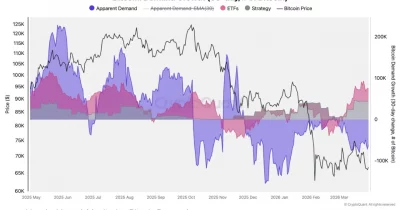
Bitcoin spot demand is contracting at its fastest pace since January 10, signaling weakening retail and institutional interest in direct bitcoin purchases. The pullback in spot buying pressure reflects hesitation among buyers at current price levels, which mirrors similar demand destruction observed in early January when BTC faced headwinds before rallying to fresh all-time highs.
The decline in spot demand carries meaningful implications for market structure. Unlike leveraged futures trading, which amplifies price swings through borrowed capital, spot purchases represent actual bitcoin accumulation. When spot demand dries up, it suggests genuine conviction buying has stalled. This gap forces price discovery to rely more heavily on derivatives markets, where leverage can exaggerate volatility and disconnect BTC from underlying fundamentals.
On-chain data shows wallet accumulation patterns softening alongside reduced spot inflows. Whale purchases have tapered, and exchange inflows indicate some holders liquidating positions rather than accumulating. The timing coincides with bitcoin trading in a consolidation zone after reaching all-time highs near 74,000 USDT in March, suggesting profit-taking pressure.
Futures markets remain the dominant price driver. Open interest on Binance, Kraken, and other major derivatives venues remains elevated, but the composition has shifted toward shorter-dated contracts. This creates dependency on continuous spot buying to sustain prices, which the current data suggests is not materializing.
Market participants should monitor whether spot demand stabilizes at current levels or continues declining. A sustained contraction without corresponding leverage reduction could create conditions for sharp corrections. The divergence between derivatives activity and actual bitcoin purchases represents a structural risk worth watching closely.