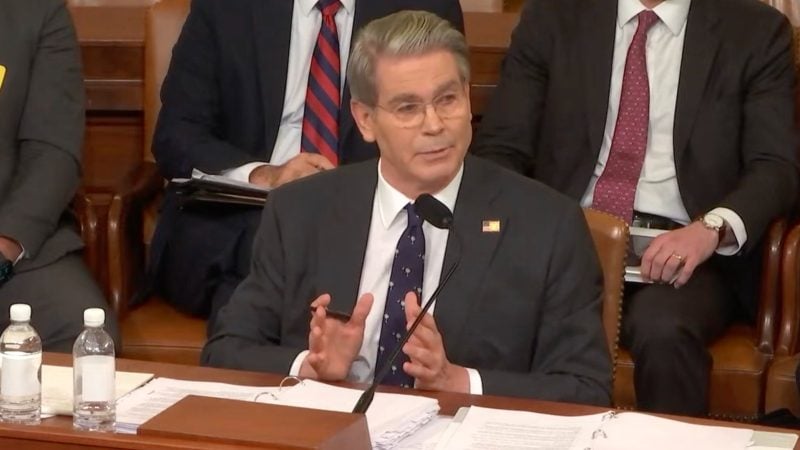
Treasury Secretary Scott Bessent doubled down on the Trump administration's opposition to a central bank digital currency during a Thursday press briefing. The CBDC rejection aligns with Trump's campaign promises to block digital dollar development, a position that gained traction among crypto advocates who view CBDCs as threats to financial privacy and decentralization.
Bessent also pushed Congress to pass the Clarity Act, legislation designed to clarify cryptocurrency regulatory jurisdiction between the SEC and CFTC. The bill has stalled in recent years but represents bipartisan interest in establishing clearer crypto guardrails. Its passage would address long-standing ambiguity over which agency oversees different digital asset classes, potentially accelerating institutional adoption by reducing regulatory uncertainty.
The anti-CBDC stance carries weight given the Fed's previous exploration of digital currency infrastructure. The move satisfies Trump's base and aligns with Republican skepticism toward government-issued digital assets. Bessent's emphasis on finishing the Clarity Act signals the administration views regulatory clarity as preferable to central bank innovation in the digital currency space.
For the crypto market, this represents a favorable regulatory environment. Bitcoin and Ethereum rallied on expectations that the Trump administration would prioritize clarity over heavy-handed restrictions. The rejection of CBDCs removes a competing technology that institutional investors feared could cannibalize demand for alternative assets.
Congressional passage of the Clarity Act remains uncertain despite bipartisan support. The legislation distinguishes between commodities and securities, assigning commodities jurisdiction to the CFTC and securities to the SEC. This framework would legitimize tokens like Bitcoin and Ethereum as commodities while subjecting others to securities law.
Bessent's dual messaging on CBDCs and the Clarity Act reflects the administration's pragmatic approach to crypto regulation. Opposition to government digital currencies combined with market-friendly clarity statutes creates a framework favoring private digital assets and established protocols. The push to finish the Clarity Act this session signals legislative momentum, though timing remains unpredictable given congressional scheduling pressures.