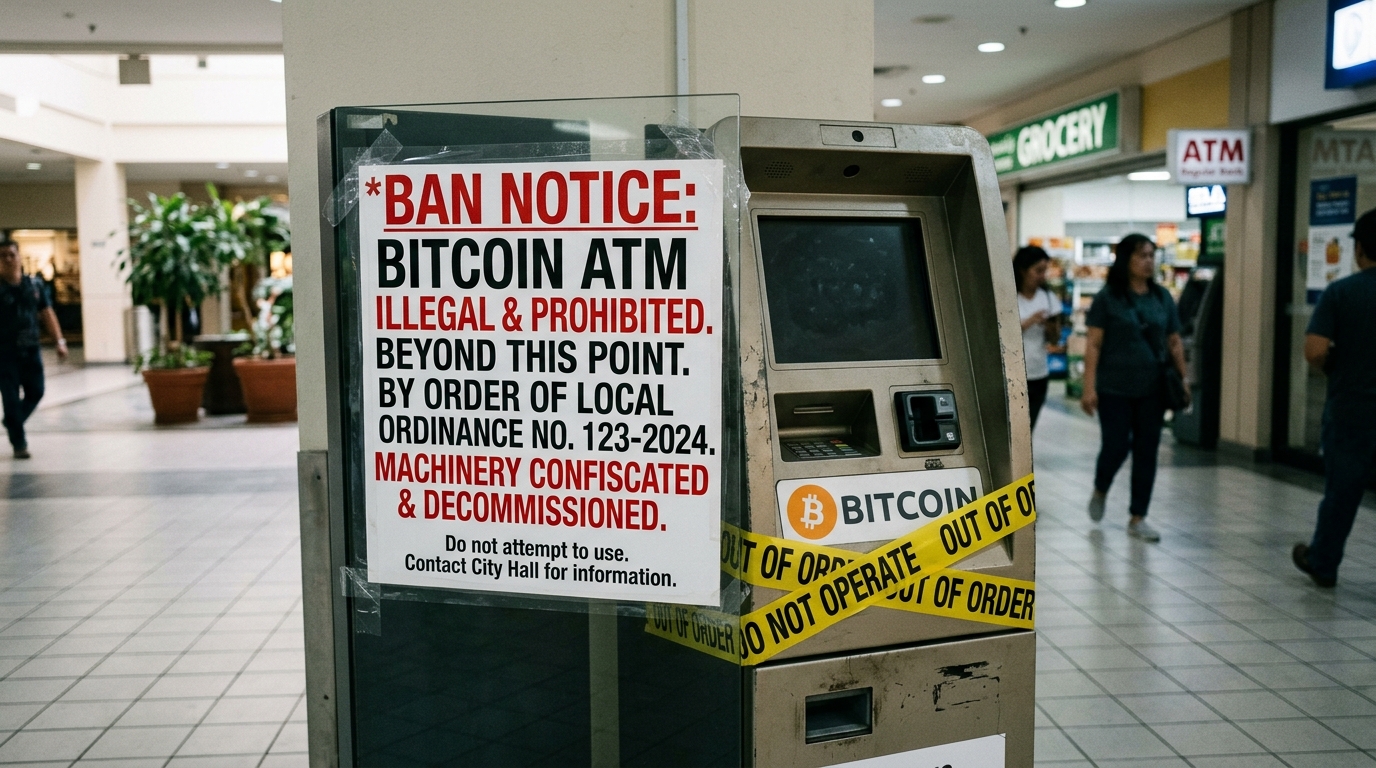
State regulators have launched a quiet crackdown on Bitcoin ATM operators, imposing bans and regulatory burdens that signal broader restrictions on crypto access points. Bitcoin ATMs serve as critical onramps for retail users seeking to convert fiat currency into Bitcoin without intermediaries like Coinbase or Kraken. Their targeting represents a regulatory squeeze on decentralized financial infrastructure.
The move reflects a pattern seen across U.S. jurisdictions. States including New York, Texas, and California have tightened money transmitter licensing requirements, increased compliance costs, and enforced stricter know-your-customer protocols. Some regulators have effectively banned Bitcoin ATM operations through prohibitive regulations that make operations economically unviable.
Bitcoin ATMs occupy a regulatory gray zone. They process fiat-to-crypto conversions, triggering anti-money laundering and banking secrecy act compliance requirements. However, operators lack clear federal guidance, forcing them to navigate conflicting state requirements. This fragmented landscape creates compliance costs that push smaller operators out of business while entrenching larger players.
The timing matters. Bitcoin ATMs have expanded significantly during bull markets, serving price-sensitive retail users who lack bank accounts or distrust traditional finance. Their restriction limits Bitcoin's accessibility to the unbanked and underbanked demographics who benefit most from permissionless currency.
The article frames Bitcoin ATMs as a "canary in the coal mine," suggesting that aggressive ATM regulation foreshadows broader moves against self-custody solutions, mixing services, and non-custodial exchanges. If regulators can suppress ATM operations through licensing and compliance burden, they establish precedent for restricting other on-and-off ramps.
This regulatory approach mirrors historical playbook against cash money transmitters. Regulators rarely announce comprehensive bans. Instead, they layer compliance requirements until operators surrender to cost-benefit pressure. Bitcoin ATM operators face identical dynamics today.
The outcome carries market implications. Reduced Bitcoin ATM availability pushes retail adoption toward custodial platforms like PayPal and Strike, concentrating custody and removing friction points that regulators view as money-laundering