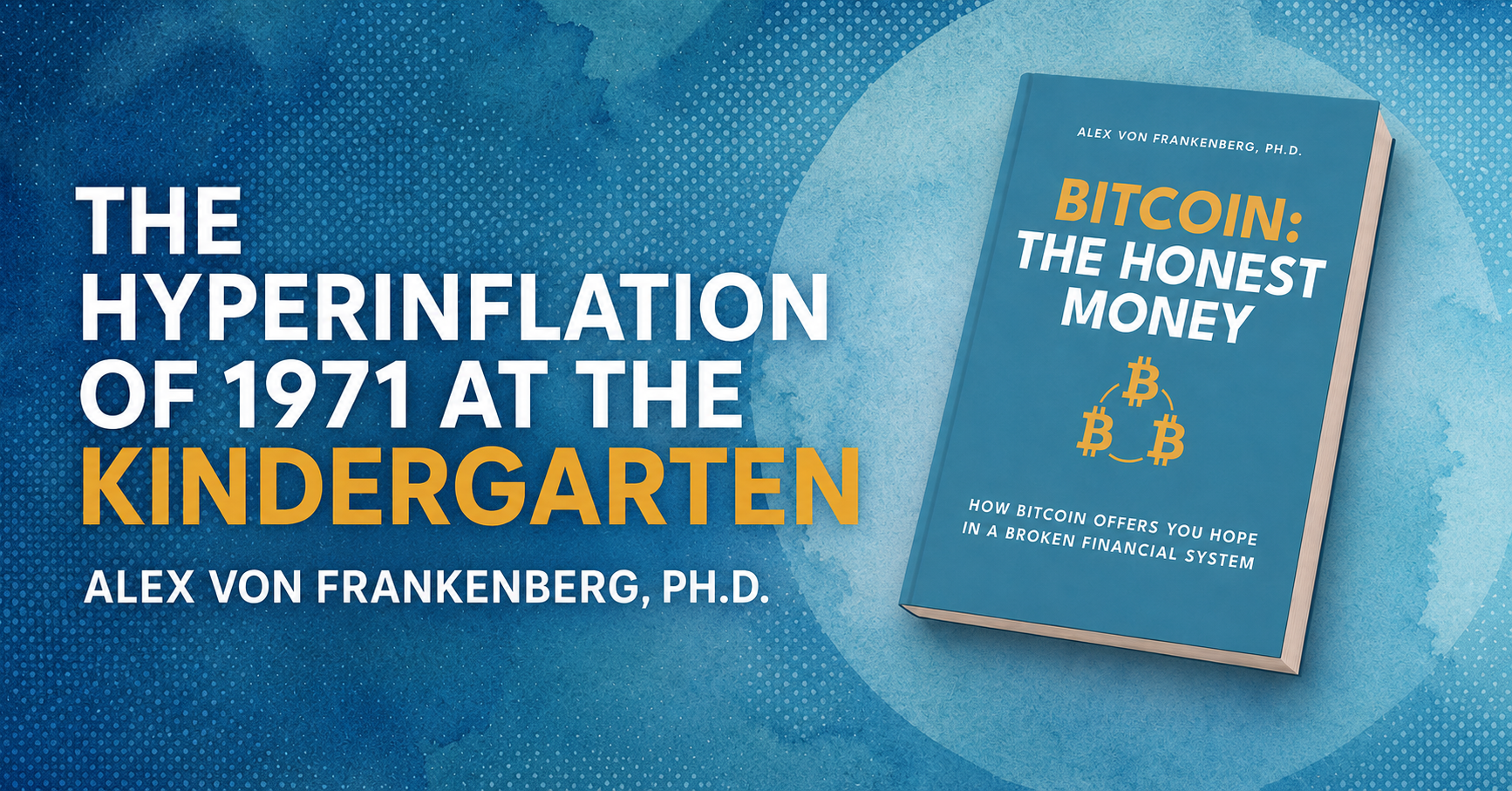
Bitcoin Magazine published an educational piece using a kindergarten hyperinflation scenario to illustrate why Bitcoin resists debasement unlike fiat currencies. The article, excerpted from "Bitcoin: The Honest Money," employs a child-friendly narrative to explain how monetary expansion erodes purchasing power.
The piece centers on a 1971 reference point, the year President Nixon closed the gold window and abandoned the Bretton Woods system. This marked the formal end of dollar-to-gold convertibility and triggered the inflationary 1970s across major economies. The kindergarten framing serves as an accessible entry point for explaining monetary policy concepts to younger readers and those new to Bitcoin's value proposition.
The core argument contrasts fiat currency mechanics with Bitcoin's fixed supply cap of 21 million coins. Fiat currencies face perpetual debasement risk because central banks can expand money supplies at will, eroding each unit's value over time. Bitcoin's immutable protocol prevents this. No entity can unilaterally increase the supply, making it mathematically resistant to inflation by design.
This educational approach reflects Bitcoin's longstanding narrative positioning it as a hedge against monetary devaluation. The piece reinforces themes central to Bitcoin adoption discourse: government monetary expansion, currency debasement, and hard money scarcity as Bitcoin's core value proposition.
Bitcoin Magazine targets this content at both newcomers and parents seeking to teach financial literacy. The 1971 reference provides historical grounding for why decentralized, fixed-supply currencies matter. Current bitcoin price action and macro conditions remain secondary to the educational message about monetary mechanics and the structural advantages Bitcoin's capped supply provides against inflation endemic to traditional fiat systems.