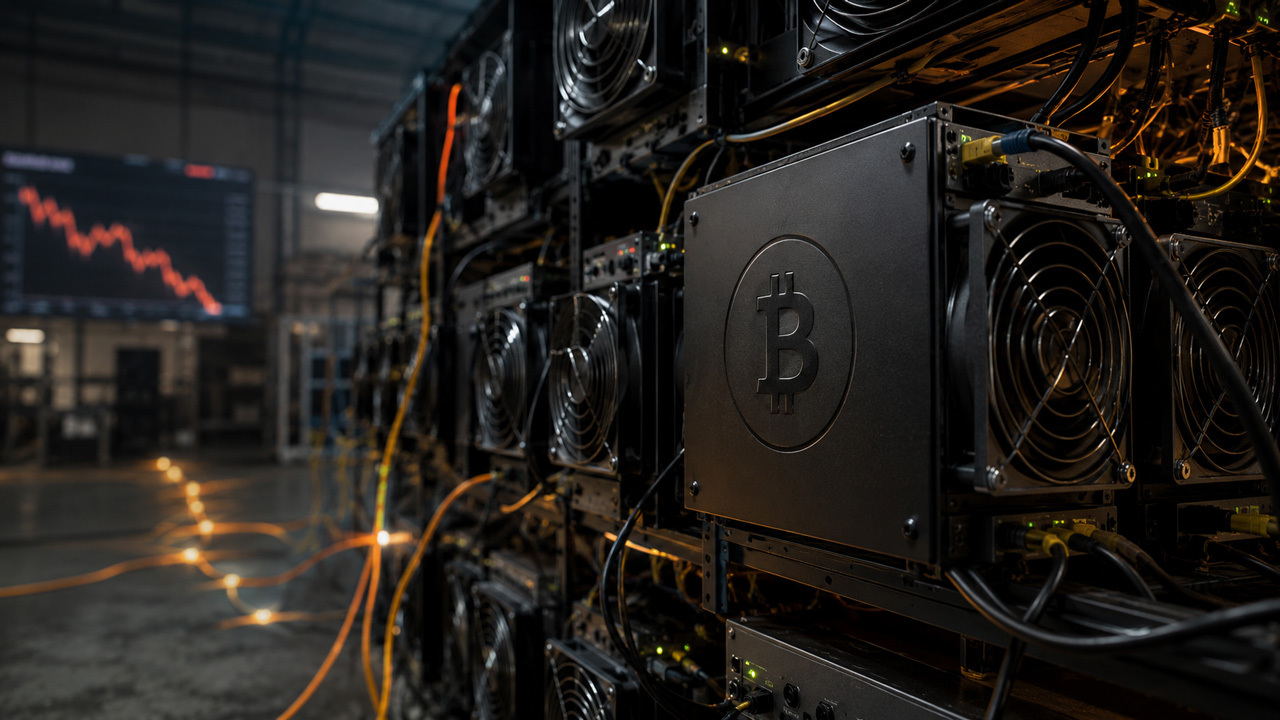
Bitcoin's mining network is bracing for one of the largest difficulty drops in its history as miner economics deteriorate sharply. The network will execute a downward adjustment on June 13 at block height 953,568, marking one of the most dramatic recalibrations since the protocol's launch 17 years ago.
Mining difficulty adjusts every 2,016 blocks to maintain a consistent ten-minute block time. When hash rate declines, difficulty falls to compensate. The projected slash reflects a brutal reality on mining operations. Miner margins have compressed to near-unsustainable levels. Hardware economics no longer work at current Bitcoin prices relative to electricity costs and equipment depreciation.
This difficulty drop signals capitulation among smaller and marginal operators. Unable to absorb losses, these miners have powered down rigs and exited the market. The largest mining pools and energy-rich operations—particularly those in jurisdictions with cheap power—are better positioned to weather the margin squeeze. Public miners like Marathon Digital, Core Scientific, and Riot Platforms face heightened pressure on profitability metrics.
The timing matters. Bitcoin's price action in recent weeks has dictated miner economics. At current levels, mining rewards (currently 6.25 BTC per block plus transaction fees) generate insufficient revenue relative to operational burn rates for most participants. The June difficulty adjustment reflects reality on-chain, where hash rate has already fallen materially.
Historically, massive difficulty drops precede capitulation events. They've occurred during prior bear markets when weak hands exit mining entirely. Once marginal producers shut down equipment, remaining operators enjoy increased block reward concentration and higher per-unit profitability on surviving hash power.
The network's self-adjusting mechanism prevents permanent damage to security. Lower difficulty means lower barriers to entry for hashpower, but also fewer total miners securing the network temporarily. Recovery depends on whether mining fundamentals improve. Bitcoin price appreciation, further transaction fee acceleration, or a structural shift toward renewable energy mining could stabilize margins.
This difficulty drop reflects genuine stress in Bitcoin's mining sector. Operators are making capital allocation decisions based on deteriorating unit economics. The industry consolidation accelerates toward larger players with lower costs of capital and access to abundant cheap power sources. Smaller independent miners face existential pressure.