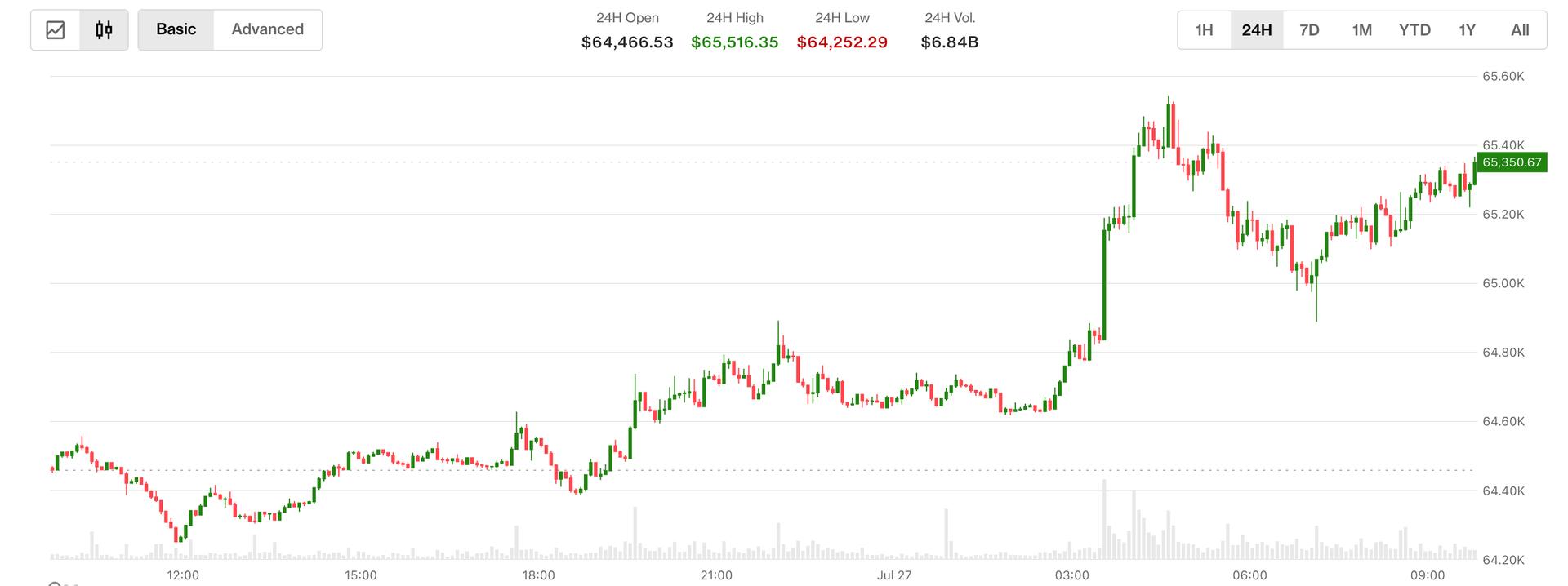
Bitcoin surged above $65,000 on Tuesday as geopolitical tensions between the U.S. and Iran eased, with oil prices falling 5 percent in response to reduced conflict risk. The move marked a recovery from recent weakness and signaled renewed risk appetite across crypto markets.
Ethereum outperformed Bitcoin during the rally, gaining ground relative to BTC and suggesting altcoins may be positioning for a broader market run. ETH strength typically indicates investors are rotating into higher-risk assets beyond Bitcoin's perceived safe-haven status.
Oil's sharp decline reflects markets pricing out immediate escalation in Middle East hostilities. When geopolitical risk premiums compress, investors typically reduce hedging positions and redeploy capital into growth assets like crypto. Bitcoin trades as a risk-on asset despite its store-of-value narrative, and the de-escalation between Washington and Tehran removed a major headwind.
The move above $65,000 holds technical relevance. Bitcoin had been testing support around $62,000-$63,000 levels in recent sessions, so the break higher clears a key resistance zone. On-chain data from CryptoQuant showed wallet accumulation patterns among long-term holders remained steady, suggesting institutional interest held despite volatility.
ETH's outperformance carried real implications for DeFi tokens and Layer 2 protocols. Ethereum-based tokens including Uniswap (UNI) and Arbitrum (ARB) moved higher alongside the broader altcoin bid. Stablecoin volumes on decentralized exchanges ticked up, pointing to increased trading activity as confidence returned.
Traders also noted U.S. equity futures rising in tandem with crypto gains, indicating risk sentiment improved broadly across asset classes. The S&P 500 correlation with Bitcoin remains positive despite recent divergences, and geopolitical de-escalation typically benefits both equities and crypto simultaneously.
The rally faces headwinds from upcoming U.S. inflation data and Federal Reserve commentary, which could reignite rate-hike concerns. Still, the combination of reduced geopolitical